II The family
The family coat of arms
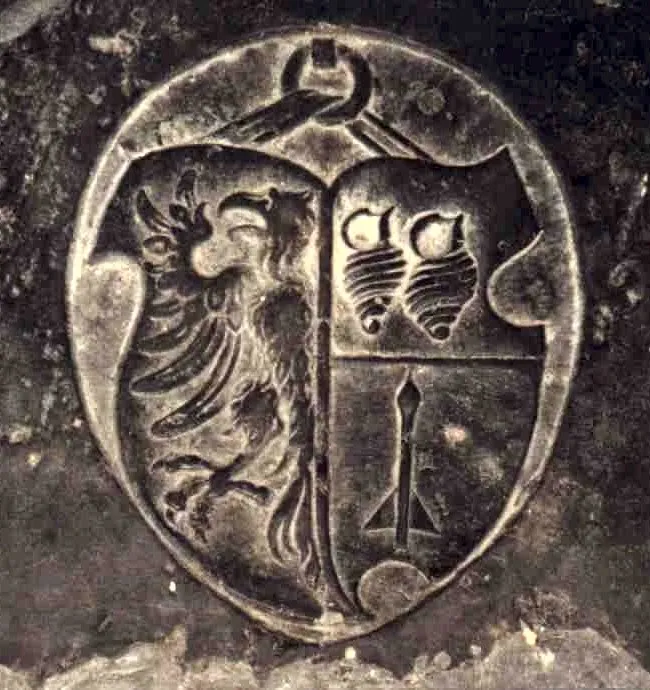
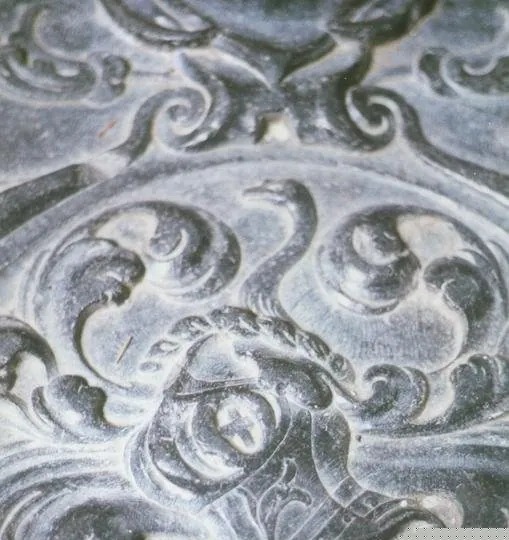
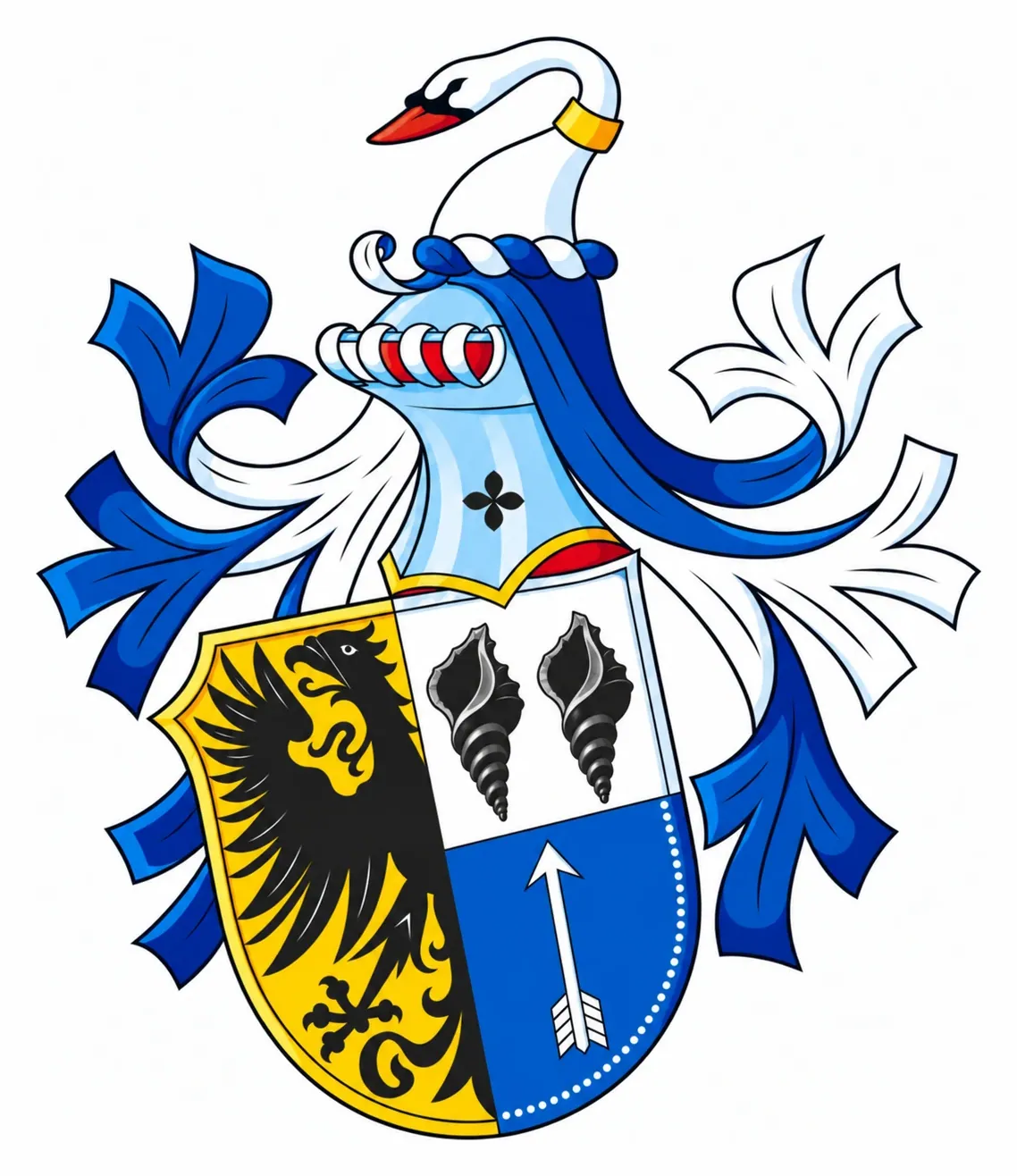
We know what the Kingma coat of arms looks like thanks to the Regina church in Zweins and archival records. The shield is divided vertically. The half on the viewer’s left shows a Frisian half eagle sable on or; in heraldry this is called the dexter (right) half, because a coat of arms is described from the point of view of the person bearing the shield (De Kinkhoorn 2). The other half is divided horizontally: above, two conch shells sable on argent; below, an arrow argent on azure. The crest is a swan’s neck issuant.
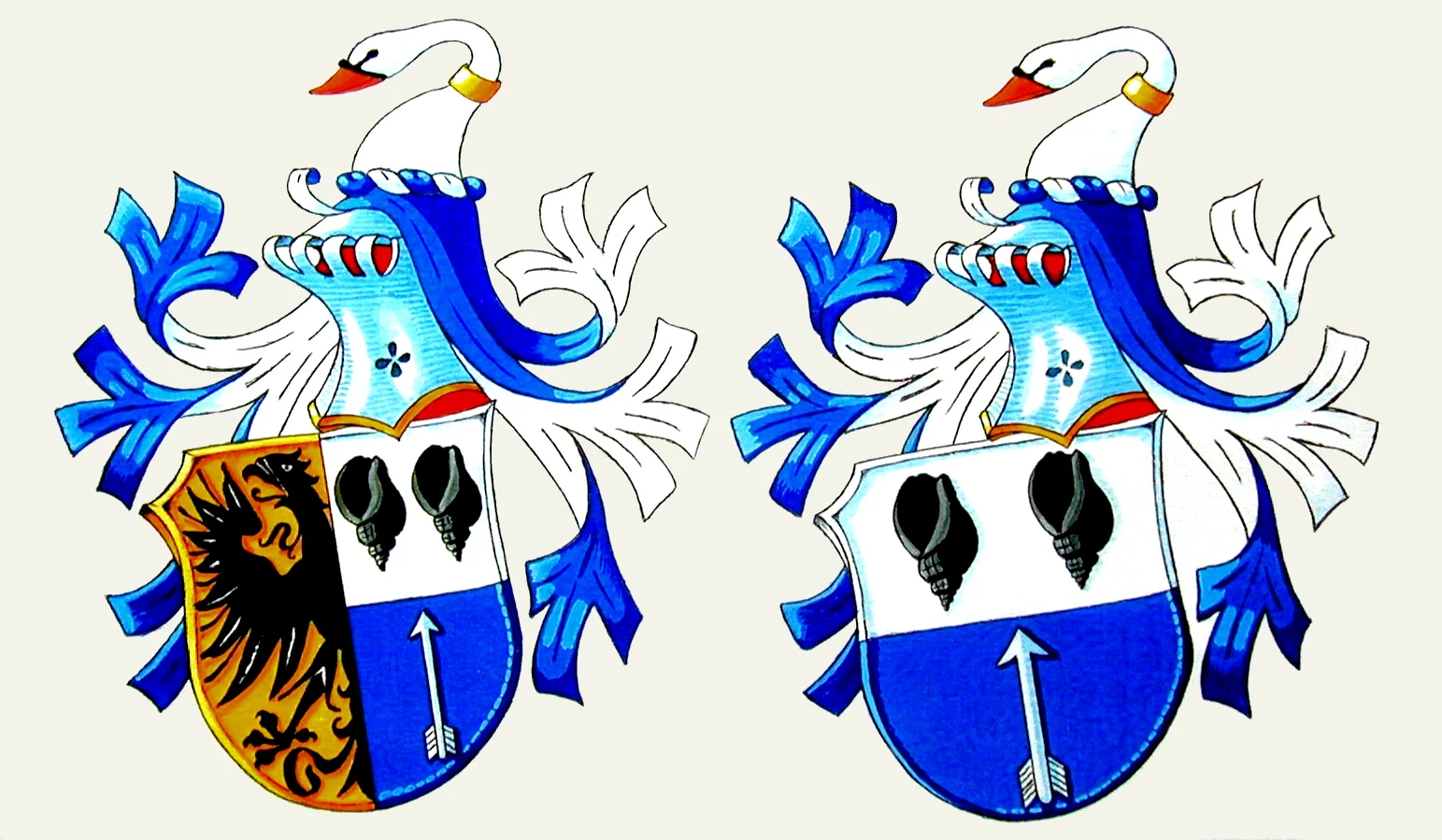
It is suspected that the shells in the coat of arms are connected with the name Kingma (originally Kinghum): the Dutch word is ‘kinkhoorn’, from kink, a twist, so a twisted, spiral horn. Today the word mainly means the whelk, but in the seventeenth century a kinkhoorn was any large twisted sea shell that looked like a horn, above all the horn blown by the sea god Triton; that is why the shells are called triton shells in the blazon of 1842. Whether the shells really have anything to do with the name is uncertain; see The name and the conch shells. In another, probably older version of the coat of arms the Frisian half eagle is missing. When the eagle was added is not known; Frisian families began to include the half eagle in their arms in the fifteenth century (De Kinkhoorn 11).