
II The family
Colonel Ignatius van Kingma
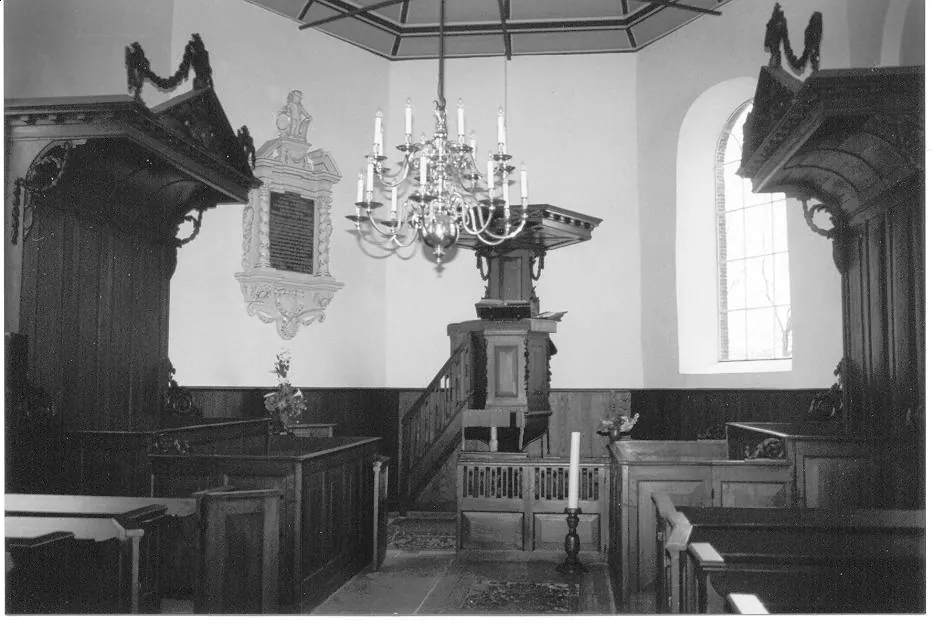
Three Kingma tombstones lie in the Regina Church in Zweins: those of Inte Jelles Kingma, a great-grandson of the progenitor Jelle Kingum, of his son Saeckle and of Saeckle’s son Ignatius. Ignatius van Kingma was born in 1621 as Inte Saeckles, and in deeds and army records he long went by the name Inte van Kingma (De Kinkhoorn 11). Like his father, he put a dignified ‘van’ before his surname. He rose to colonel of a cavalry regiment in the army of the States, the army of the Dutch Republic, and later held the honorary rank of brigadier. He was the last Kingma to live at Kingma State.
Student at Franeker and Utrecht
Ignatius enrolled as a student at Franeker on 20 July 1640 and then studied at Utrecht (De Kinkhoorn 18; Joost Kingma, Ruiter voor de Republiek (2022), chapter 3). There he had a relationship with Margaretha (Grietje) Uitdenbongaert, who gave birth to a son, Johan, in Utrecht on 10 April 1645. A lawsuit followed. At the end of 1645 Ignatius summoned her before the Utrecht court for slander; she then took the matter to the Court of Friesland and demanded that he marry her, or else pay 6,000 Carolus guilders, together with the costs of the confinement and the child’s upkeep. On 13 November 1647 his father Saeckle settled the case for 2,315 Carolus guilders. Ignatius did not ratify the settlement until 15 September 1649, after the Court had ordered him to (trial papers in the Van Beyma thoe Kingma family archive and in the case file of 1701-1707 at the Court of Friesland, Tresoar; transcriptions by Martha Kist for Joost Kingma, Ruiter voor de Republiek (2022), chapter 4). Why there was no marriage, the documents of those years do not say. According to Johan, his father could not marry in Friesland against the will of his own father.
Ignatius never recognised Johan as a legitimate child, but the boy bore his name from early on: in April 1654 the Leeuwarden court, at his mother’s request, appointed a guardian for her little son ‘Johannes Kingma, bij de Ritm[eeste]r Ignatius Kingma geprocreeert’ (fathered by ritmeester Ignatius Kingma) (authorisation of 3 April 1654). Ignatius did not finish his studies; he chose the army.
From cornet to ritmeester
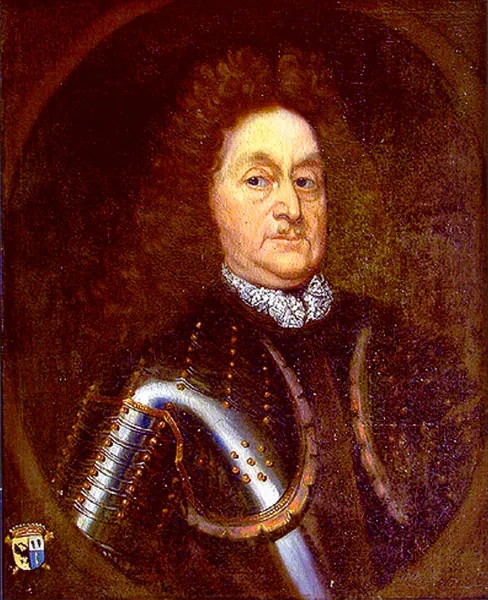
On 13 February 1647 the Delegated States (Gedeputeerde Staten) of Friesland appointed him cornet, the standard-bearer of a cavalry company, in the troop of ritmeester Jacob Spaen. His brother-in-law Jacob van Gemmenich, the husband of his sister Catharina, had put in a word for him with Stadtholder Willem Frederik, in whose diaries ‘Kingema’ is afterwards regularly found at table (deed of 13 February 1647 in the family archive, Tresoar; diaries of Willem Frederik; Joost Kingma, Ruiter voor de Republiek (2022), chapter 5).
In April 1652 he became ritmeester, commander of a company of harquebusiers, horsemen armed with a short firearm: on the stadtholder’s recommendation the Delegated States gave him the horse company of Colonel Spaen. From Kleve, where the stadtholder had just married, he wished Ignatius ‘veel gelucks heil ende segen’ (much luck, prosperity and blessing) in a letter of 18 May 1652, and asked him to pay Spaen promptly what he still owed his predecessor under their contract (the stadtholder’s letter; De Kinkhoorn 10; Joost Kingma, Ruiter voor de Republiek (2022), chapter 5).
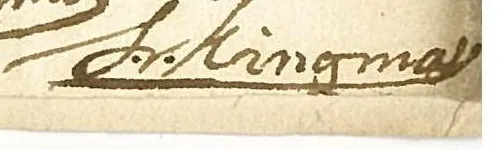
During the First Anglo-Dutch War his company guarded the coast. In June 1652 the States General sent it from Wesel to Brouwershaven in Zeeland, in September to Leeuwarden, and in the summer of 1653 it lay on Texel (resolution of June 1652). From there Ignatius wrote to the stadtholder on 27 June 1653 that he had received a marching order from the States of Holland, but that his commander, the lord of Noordwijk, kept him there because the English were close by. He had accepted this ‘onder behoorlijke protestatie’ (under formal protest), in the presence of ‘mijn heer Slijp’ (Mr Slijp) and other officers. In September the company returned to Leeuwarden (letter of 27 June 1653; resolution of 6 September 1653; De Kinkhoorn 10; Joost Kingma, Ruiter voor de Republiek (2022), chapter 5).
Two marriages
On 7 December 1651 Ignatius, then still a cornet, married Jaeycke van Vierssen, daughter of the mint master of Friesland, in Leeuwarden (marriage of 7 December 1651). Two months later, on 12 February 1652, his father died, and Ignatius became owner and occupant of Kingma State (De Kinkhoorn 4). Jaeycke died on 28 July 1652, 33 weeks after the wedding, while her husband, according to her funeral poem, ‘voor ’t landt in Brouwershaven waeckt’ (kept watch for the country at Brouwershaven). That poem by the Reverend E.L. Hesenaer is on her memorial in the church at Zweins, with the line ‘Wort door een hete koorts met ’s lyfsvrucht weggeruckt’ (is snatched away by a hot fever together with the fruit of her womb): she died with her child, probably of childbed fever (De Kinkhoorn 4; De Kinkhoorn 7).
In October 1654 he and Ida (Ydt) van Meynsma, a Catholic widow, registered their intention to marry in Leeuwarden (marriage banns of 7 October 1654). He tried to bring her into the Reformed Church, and to that end in 1662 called the former Franciscan Petrus Mestrum as minister of Peins and Zweins. The conversion went badly, especially when Ida’s brother Gabbe van Meinsma was present, who silenced the minister time and again with his arguments (De Kinkhoorn 7; Genealogysk Jierboek 2010, p. 304). In Leeuwarden a daughter Intia (1660) and a son Inte (1662) were baptised; according to an old genealogical manuscript the couple ‘hebben wel kinden gehadt doch altoos jongh gesturven’ (did have children, but they always died young) (ibid.). Ida died in the night of 29 to 30 November 1671 at Zweins and was laid to rest with her family at Beers (Genealogysk Jierboek 1970, p. 33).
Major
Unlike his family life, his career went largely well. From 1654 to 1663 his company was garrisoned at Wesel, a fortress town on the Rhine (resolution of August 1654). From there, in June 1661, he asked the stadtholder for leave to go to Friesland ‘voor een tijtlangh wegens sijn particuliere affairen’ (for a while on account of his private affairs) (request of 22 June 1661; De Kinkhoorn 10). When the major of the Lord of Sommelsdijck’s cavalry regiment, Count Van Stirum, died in 1661, Ignatius, as the most senior ritmeester, asked for the post, without pay. The States of Friesland backed him, and on 3 August 1662 he received his commission as sergeant-major, as a major was then called (commission of 3 August 1662; De Kinkhoorn 10; Joost Kingma, Ruiter voor de Republiek (2022), chapter 5). In August 1663 his company moved to the city of Groningen (resolution of 18 August 1663). According to Joost Kingma, in 1664 he took part in the recapture of the Dijlerschans, a fort on the border that Bernard van Galen, the Bishop of Münster, had seized at the end of 1663 (Ruiter voor de Republiek (2022), chapter 5).
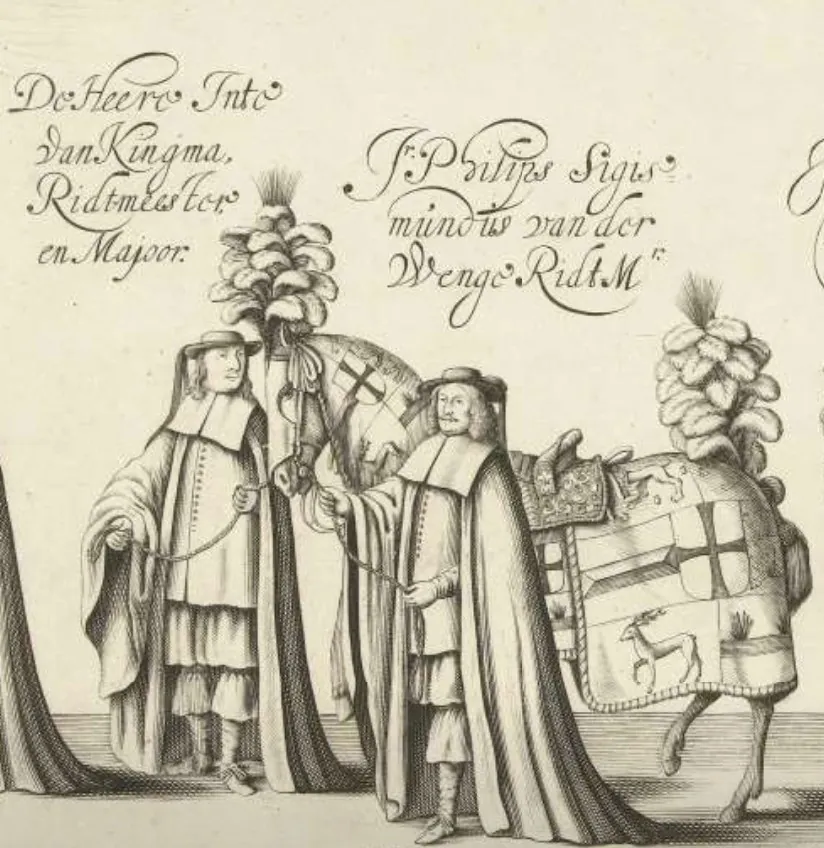
In December 1664 he walked in the funeral procession of Stadtholder Willem Frederik in Leeuwarden, the only man in his part of the procession without the title jonkheer (series of prints in the Rijksmuseum; Joost Kingma, Ruiter voor de Republiek (2022), chapter 5). On the way back, on 6 January 1665, the Tolbrug in Franeker gave way under the party of Prince Johan Maurits of Nassau-Siegen. The prince lay in the water up to his neck, ‘onder de voeten van 6 woedende Paerden’ (under the hooves of six raging horses), with, among others, ‘Mayor Kingma’, probably Ignatius, but ‘alle schaedeloos gebleven’ (all came away unharmed), he wrote to his sister (De Kinkhoorn 1).
Ignatius was also churchwarden of Boer, north-east of Franeker. Under his direction the church there was renovated in 1664; the gateway bears his initials I.V.K., the pulpit his name (De Kinkhoorn 7; Sytse ten Hoeve, ‘Het kerkpoortje van Boer’ (2011), cited in Joost Kingma, Ruiter voor de Republiek (2022), chapter 5). His career was not entirely without setbacks. On the audit day of the church of Boer, 17 July 1667, the churchwardens’ accounts were not ready, and Ignatius insulted the grietman (district magistrate) of Franekeradeel, Johan van Goslinga, and the notary Petrus Rudolphi. They complained the next day to the Delegated States, who found that as a soldier he could not hold a church office and that he had left his post at Delfzijl against their orders. They suspended him and stopped his pay. On 11 April 1668 the States of Friesland appointed him major again, now of the regiment they formed from their seven old horse companies under Colonel Ernst van Haren; the States General dealt with the appointment on 5 May 1668 (De Kinkhoorn 11, correction of 29 September 2026; resolution of 5 May 1668; Joost Kingma, Ruiter voor de Republiek (2022), chapter 5).
Colonel in the disaster year 1672
In anticipation of a war with France the Republic expanded its army. On 7 March 1671 the States of Friesland appointed Ignatius colonel of a new cavalry regiment of six companies, named after him (De Kinkhoorn 11; Joost Kingma, Ruiter voor de Republiek (2022), chapter 5).
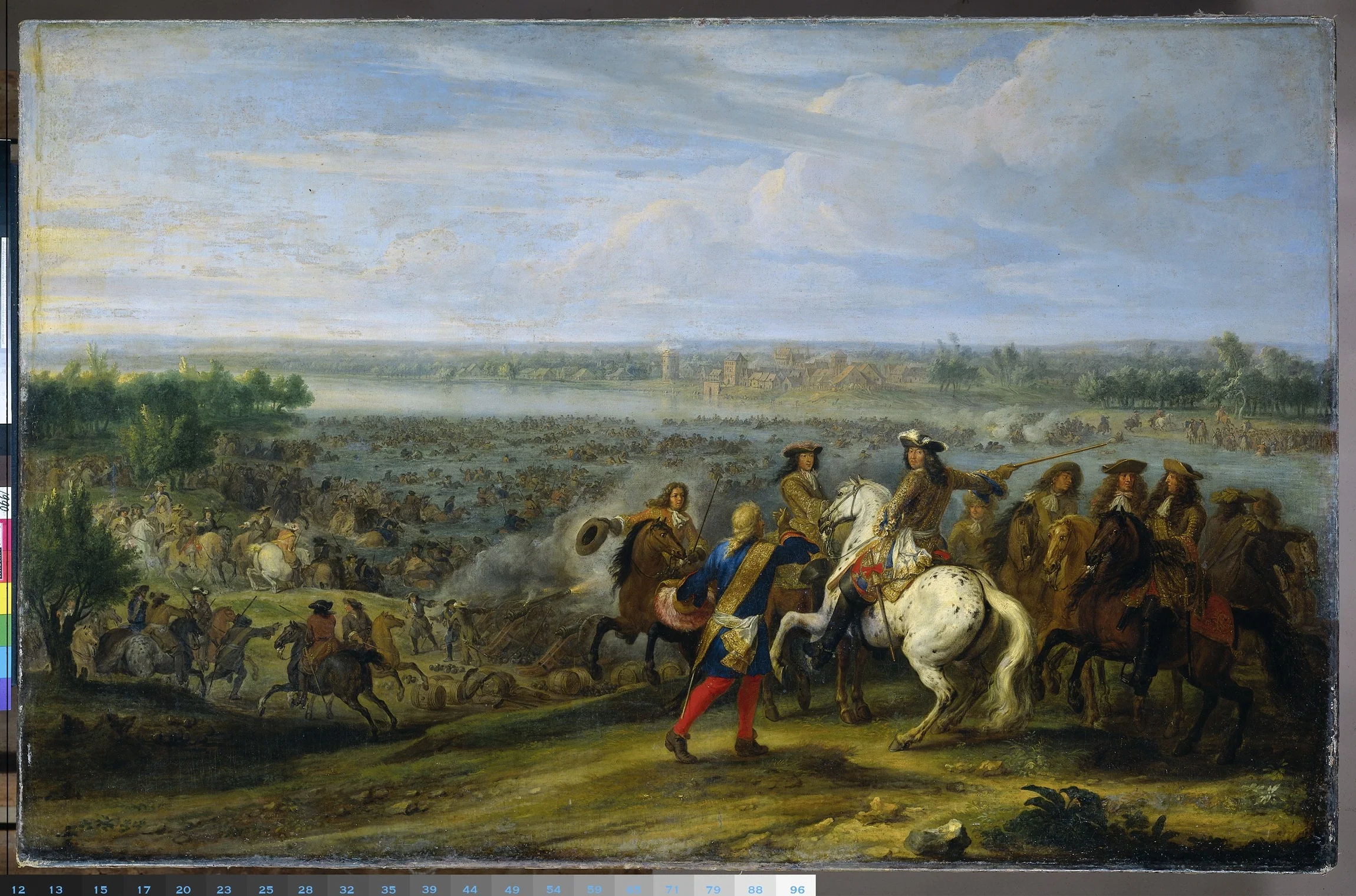
In the disaster year (rampjaar) of 1672, France, England and the bishops of Cologne and Münster attacked the Republic. The Kingma regiment was first stationed near Meppel and Coevorden, to guard the passages through the Drenthe peat bogs against the Bishop of Münster, and was then sent to the Rhine. On 12 June 1672 the French troops crossed the river at the Tolhuis near Lobith, watched by King Louis XIV. The cavalry of the States rode out against the first of them, but had to fall back under the fire of the French battery. The same day the field deputies reported that the enemy had beaten, among others, the cavalry regiments of Kingma, Haersolte, La Lecq and Joseph (De Kinkhoorn 20; De Kinkhoorn 11; Joost Kingma, Ruiter voor de Republiek (2022), chapter 1).
With the retreating army of the Prince of Orange the regiment came to Utrecht and then to Muiden, on the Holland Water Line, where Prince Johan Maurits was keen to keep it (De verdediging van Nederland in 1672 en 1673, 1850). But Friesland wanted its troops back and got its way (resolution of 1 July 1672): in August 1672 the regiment, under Hans Willem van Aylva, defended the Frisian water line at Heerenveen and the Oude Schouw against the troops of the Bishop of Münster (Joost Kingma, Ruiter voor de Republiek (2022), chapter 1).
In 1674 ‘Heer Kingma’ (Lord Kingma) and his regiment appear in the order of battle of the Prince of Orange’s army, in the second line of the cavalry on the left wing; he held the same place at the Battle of Seneffe on 11 August 1674. According to Joost Kingma he was wounded there (Historien onses tyds, 1685; Joost Kingma, Ruiter voor de Republiek (2022), chapter 1).
Brigadier without a regiment
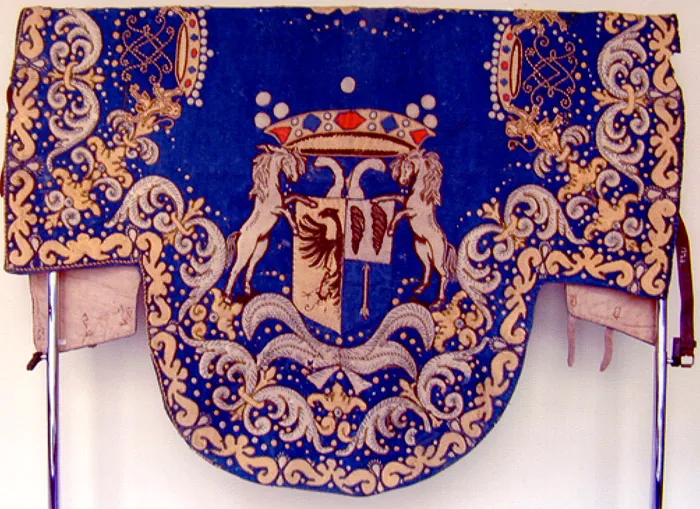
From 1678, according to his own petitions, Ignatius received no more pay. For years he asked the States of Friesland, through his nephew Zacheus van Gemmenich, for his old pay as a major, and in 1688 he had those petitions printed. Meanwhile he held the honorary rank of brigadier. That is how he styles himself in a first will of November 1683, ‘Brigadier ende Colonel over een Regiment Ruiteren’ (brigadier and colonel of a regiment of cavalry), and that is what he is called in 1685 in deeds from Bergen op Zoom, where he was with men of his regiment (De Kinkhoorn 16; deed of 27 April 1685).
On 11 June 1686 his standard, the regiment raised in 1671, passed to jonkheer Douwe Karel van Unia. The States of Friesland continued to recognise Ignatius as colonel, and in 1688 the States General decided not to restore his regiment. When Stadtholder William III ordered him in September 1688 to join the army at Nijmegen as colonel, he replied that he had no money to take the field (De Kinkhoorn 11; resolution of 20 April 1688; his printed petition of 1688; Joost Kingma, Ruiter voor de Republiek (2022), chapter 5).
At home in Zweins he was at odds with his neighbour, the Franeker professor Johannes van der Waeyen, who drove his coach, ‘nu met vier, dan met twe paerden’ (now with four, then with two horses), along the avenues of Kingma State to his own property. In 1683 the Court of Friesland forbade him to do so. Yet in August 1689 Ignatius complained again: the professor left the gates open, and when Ignatius’s tenant called after him to shut them, he was answered with laughter and cheers, and the horses got out onto the dike (Van Beyma thoe Kingma family archive, Tresoar; Joost Kingma, Ruiter voor de Republiek (2022), chapter 6).
Will and inheritance
In November 1683 Ignatius began a will that breaks off in the middle of a sentence (De Kinkhoorn 16). On 14 December 1696, at the age of 75, a new will was ready (De Kinkhoorn 13). It begins:
“In den Name Godes Amen. Alzoo niets sekerder sij dan de doodt, en onzekerder dan de uire en tijdt van dien, in overdenking van welks hebbe ik Ignatius van Kingma old Brigadier en Collonel over een regiment Ruiteren residerende tot Sweins, met voorbedagte rijpe rade, volkomen verstandt, redenen en memorij, uit mijn eigen vrije gemoedt, en wille gemaeckt, dees mijn Testament, uiterste en laatste wille …” (In the name of God, Amen. As nothing is more certain than death, and nothing less certain than its hour and time, I, Ignatius van Kingma, former Brigadier and Colonel of a regiment of cavalry, residing at Zweins, after mature deliberation, in full possession of my understanding, reason and memory, and of my own free will, have made this my will and last testament …)
And so it continues for fourteen handwritten folio pages. Ignatius made his nephew Zacheus van Gemmenich, the son of his sister Catharina (Trintie), heir to Kingma State as a fideicommissum, a kind of entail: the heir received the use of the property, but had to pass it on undivided to the next generation. Zacheus and the later heirs had to add ‘thoe Kingma’ to their name and bear the Kingma arms in their own coat of arms. Ignatius no longer had any legitimate children (De Kinkhoorn 4; De Kinkhoorn 13; Joost Kingma, Ruiter voor de Republiek (2022), chapter 6).
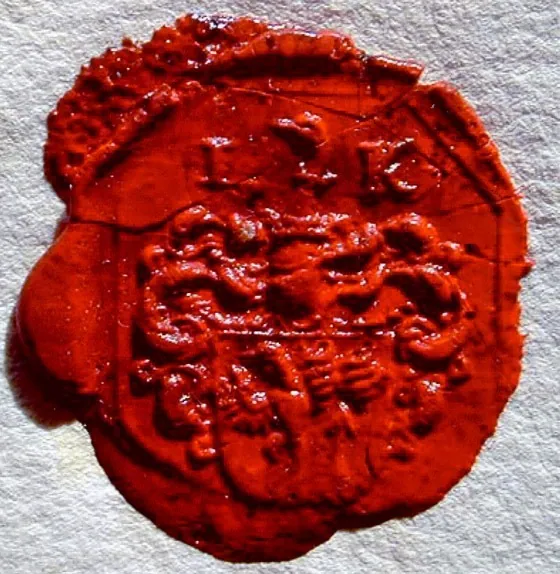
In an addition of 12 November 1698 he changed some legacies: what he had left to the church of Peins he divided between the church and its deacons’ fund, and he halved the legacy to his maidservant Antie Keimpes to 400 Carolus guilders. He signed the addition alone, ‘op mijn Huys tot Sweins’ (at my house at Zweins), and added his wax seal (De Kinkhoorn 15; De Kinkhoorn 4).
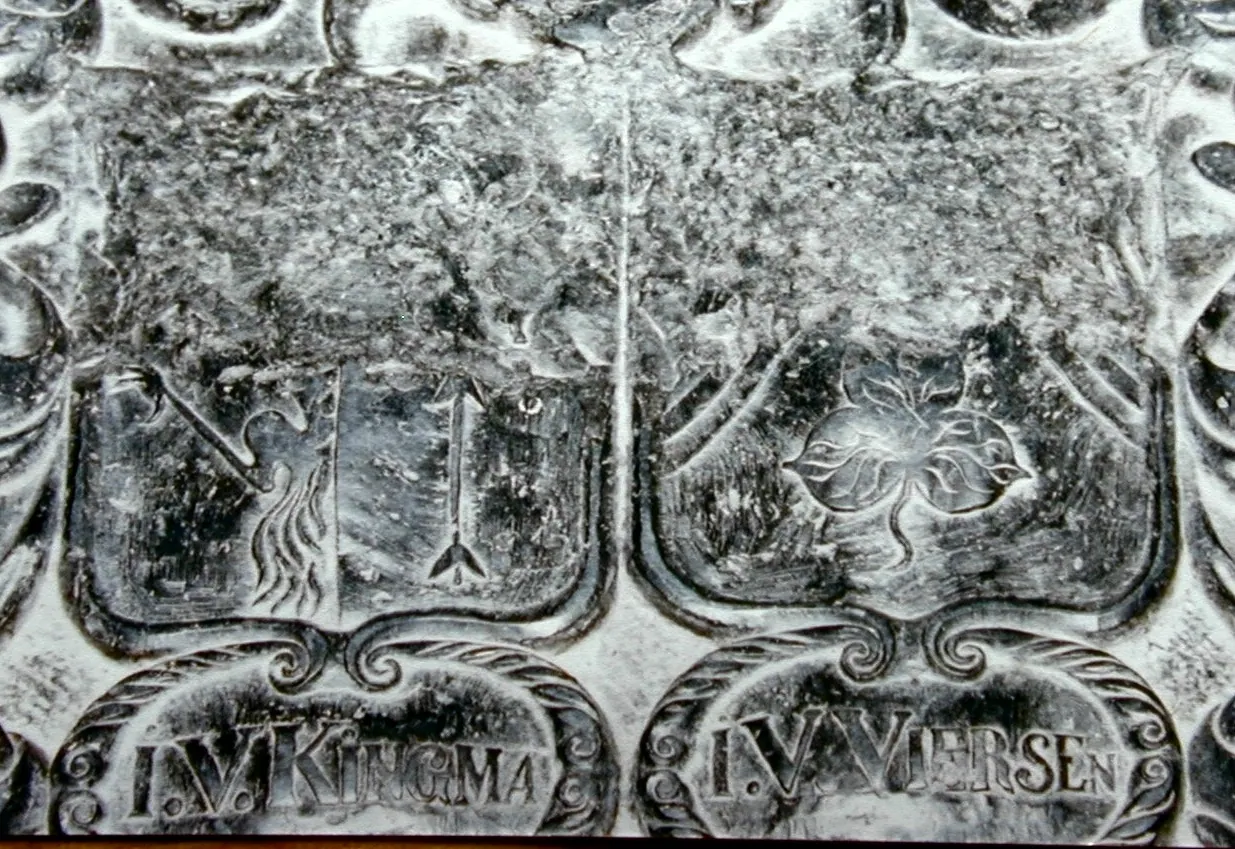
Ignatius died on 26 November 1700 (church members’ register of Peins) and was buried in the church at Zweins, beside his first wife Jaeycke. In his will he had stipulated that within a year of his death his heirs were to have ‘de namen en wapenen van mij testator en van wijl mijn vrouw Jaijke van Viersen’ (the names and arms of me, the testator, and of my late wife Jaijke van Viersen) carved on the tombstone, on pain of a hundred rixdollars to the New Orphanage in Leeuwarden (De Kinkhoorn 14). The upper half of both coats of arms has been hacked away: in 1796, in the French era, the arms of the fideicommissum on the estate and in the churches had to be removed, because family arms were seen as a sign of class distinction. Something probably stood over the lower half at the time, which spared it; on the other Kingma tombstones the shields were hacked away completely (De Kinkhoorn 4; De Kinkhoorn 14).
His son Johan, by then a ‘Coopman in sijden stoffen tot Utrecht’ (silk merchant in Utrecht), claimed a sixth of the estate before the Court of Friesland in 1701: the share that Frisian law gave a natural child when there were no legitimate children. Zacheus would not even grant him the name Kingma, and argued ‘dat een speelkind ’t welk nooit onder eens vaders magt is geweest, niet van des vaders familie kan geagt worden’ (that an illegitimate child who was never under his father’s authority cannot be considered a member of the father’s family) and ‘dat soodanig persoon niet de oorsprong, geslagt en conditie van syn vader maar van syn moeder volgt’ (that such a person follows not the descent, lineage and status of his father, but those of his mother). Johan replied that he had been called Kingma from childhood and that his father had openly supported him. The case dragged on until 1707: on 7 June of that year the Court declared Johan’s claim inadmissible, and each side bore its own costs (case file at the Court of Friesland, Tresoar; De Kinkhoorn 4; Joost Kingma, Ruiter voor de Republiek (2022), chapter 6).
Ignatius was the last Kingma to live at Kingma State. After him Zacheus lived there himself, and after Zacheus’s death in 1720 his daughter Petronella, who was still living there as a widow in 1753. Around the middle of the eighteenth century the estate passed by inheritance to the Van Beyma family; Petronella’s sister Catharina had married Coert van Beyma in 1716. The Van Beyma thoe Kingmas kept the estate until it was sold for demolition in 1864 (Verslagen omtrent ’s Rijks oude archieven XXIX (1906), p. 373; De Kinkhoorn 13).
More about Ignatius. Joost Kingma, Ruiter voor de Republiek. Ignatius van Kingma, een Friese kolonel in het rampjaar 1672 (Gorredijk: Noordboek, 2022; in Dutch), a biographical sketch focusing on the disaster year (see newsletter 7). All the sources we know of are on his page in the family tree.