IV De Kinkhoorn
De Kinkhoorn 1 — May 2000
Volume 1, number 1
This issue as pdf (Dutch) · Read the Dutch original · the German translation by Ralf J. Kingma
Foreword
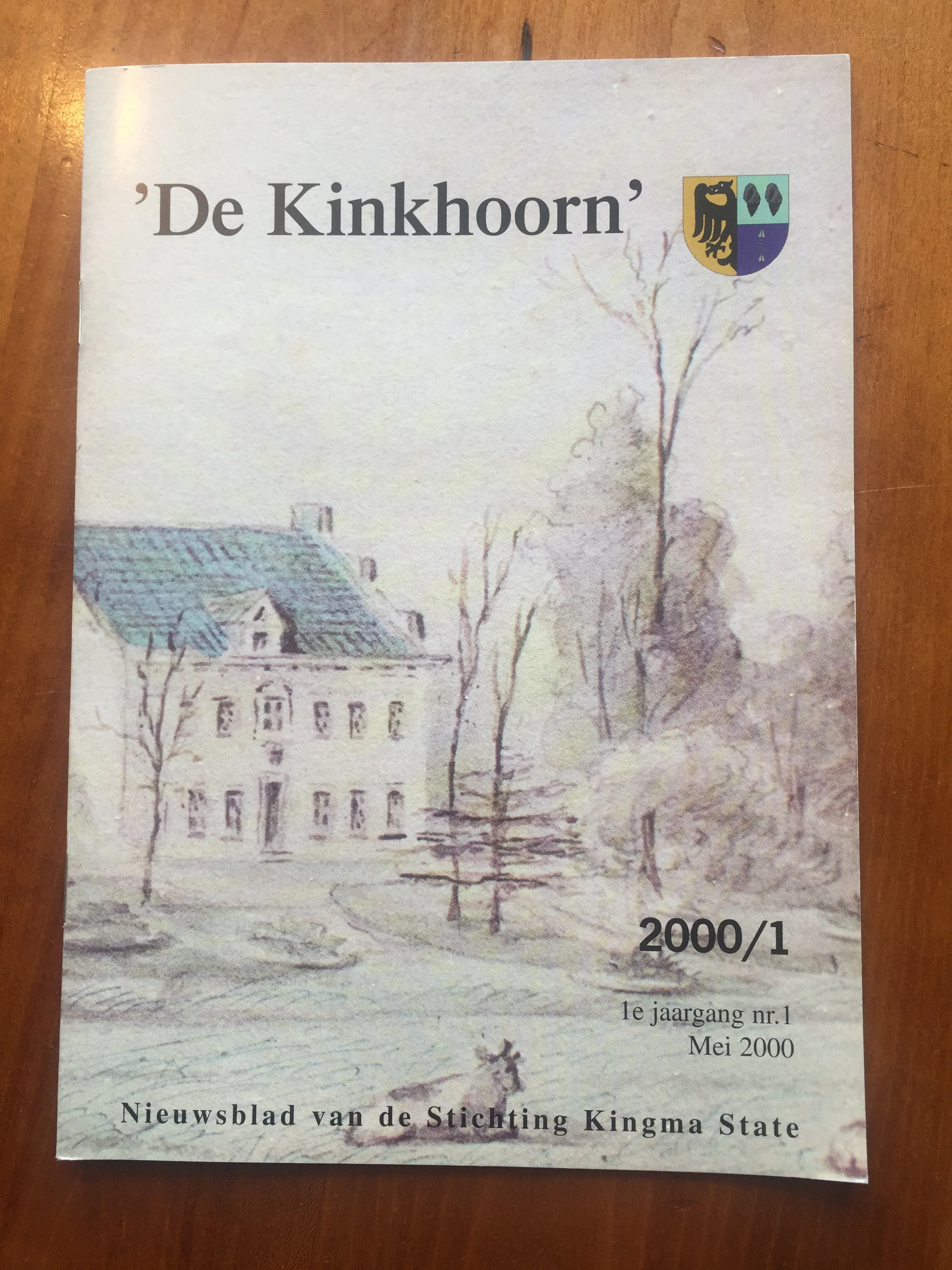
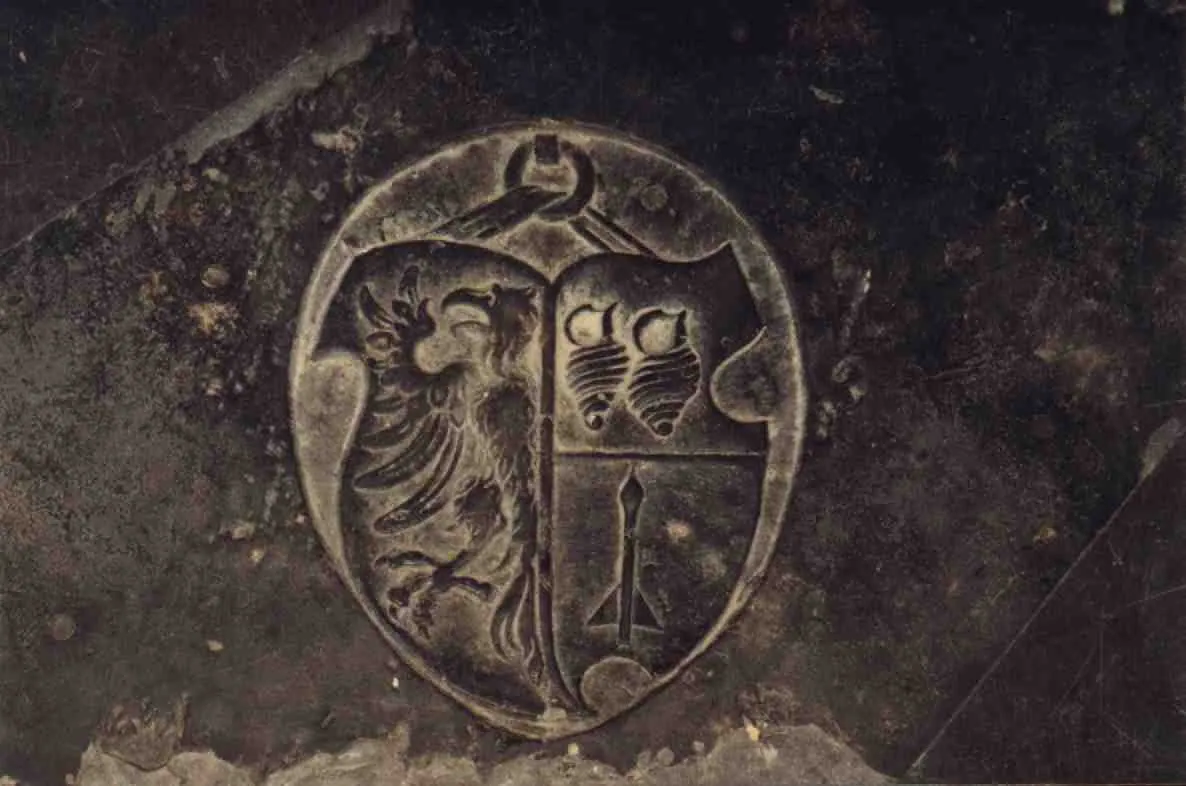
This is the first newsletter that we are sending to all donors of the Stichting Kingma State. The intention is to use these newsletters to keep you informed of what we have learned and will still learn about the history of the Kingma family, about the history of Kingma State and everything connected with it, and about the particulars of the Kingma coat of arms. A great deal is already known, but much still remains to be found out. We will also report on the course and the results of the Kingmadag.
The idea for the Kingmadag in Zweins arose from a tradition that has existed in our family for more than 15 years. By “our family” I mean, in this case, all the descendants of my parents and their partners, ± 50 people. The tradition consists of an annual walking tour, organized in turn by one of the family members in his/her home area, with a picnic halfway and pancake eating to finish.
About two years ago, two of my cousins began tracing the genealogy of our family. I enthusiastically joined them at the time, and the three of us soon found the connection with the oldest known Kingmas who lived on a state (a Frisian manor house with land) in Zweins.
This led, last year, to the idea of holding our Kingmadag in Zweins in the year 2000.
Now an initiative has been taken in Friesland to hold a large reunion in July 2000, in all the towns and villages, to which all Frisians and their descendants who live outside Friesland are also invited. Various cultural events also take place during that period. The whole is referred to by the name “Simmer 2000”.
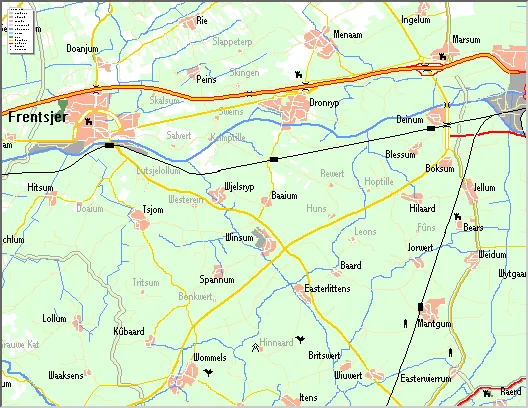
This led us to decide to fit our “Kingmadag” into the framework of “Simmer 2000” and, in doing so, to invite all Kingmas and their relatives, as many as possible, to take part in the Kingmadag on 8 July 2000 in Zweins. On this day the participants will be guided along the historical sites and informed, as much as possible, about the genealogy of the family and the history of Kingma State and the coat of arms.
To give more of a foundation to the organization of the day and to the further research into the genealogy and history, the “Stichting Kingma State” has been established. In due course the foundation will also look into the possibility of rebuilding Kingma State within the framework of “De herinrichting van Land- goederen”.
You will by now have received the definitive invitation for the Kingmadag. I hope that you are able to come. If not, we will in any case keep you informed.
I thank you for the interest you have shown and for the fact that you have become a donor. On behalf of the other board members as well, I wish you, if you come, a pleasant day on which you may also make new contacts, and we will do our best to provide you with as much information as possible.
C.S.J. Kingma Chairman
The founding of the Foundation
The Stichting Kingma State was founded on 8 July 1999 before notary Ackerman in Driebergen.
The purpose of the foundation is to promote historical knowledge of Kingma State and the Kingma family. In addition, the foundation aims to promote the rebuilding of Kingma State.
Board members of the foundation are:
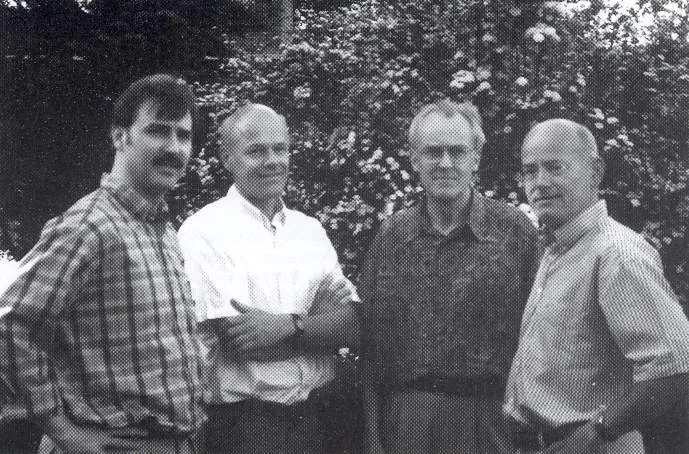
C.S.J. (Kees) Kingma, chairman
J.H. (Joost) Kingma, secretary
J.M. (Jeroen) Kingma, treasurer
W.J. (Wieb) Kingma, board member.
De Kinkhoorn
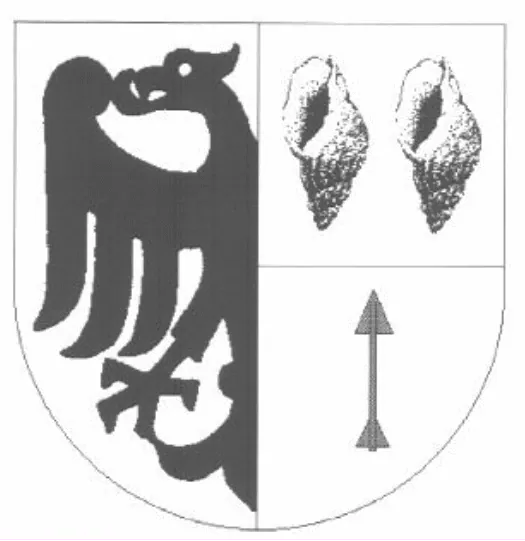
This is the name we have given to the periodical newsletter of Stichting Kingma State. This newsletter is the means of communication between the Foundation's board and the donors, and among the donors themselves. A horn is also a means of communication. Why Kinkhoorn? Because two Kinkhoorns appear in the Kingma coat of arms.
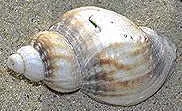
What is a Kinkhoorn? It is the house (the shell) of a sea snail, usually called a whelk, with the scientific name Buccinum undatum. The house is a pointed horn with a number of ribbed, bulging whorls and can reach a height of 10 cm, this being the distance from the tip to the bottom of the shell. The largest diameter can be about 5.5 cm.
The unabridged "Van Dale" dictionary gives 1488 under the entry for kinkhoorn as the earliest use of the word, and notes that it derives from kink (= a bend, coil) and thus means "twisted little horn." It also states "commonly found in the Wadden Sea," but unfortunately that is no longer the case. The "Wadden Bulletin" of February this year states that the whelk, or Kinkhoorn, disappeared almost unnoticed from the Wadden Sea some ten years ago. Causes cited include, among others, beam trawling and pollution, for instance from "antifouling," the anti-fouling paints used on ship hulls.
Whether the name Kingma is connected to the word Kinkhoorn is not known to me. But it is clear that the sea clay deposited by the sea must have contained many shells of the Kinkhoorn, which was common at the time. And it is possible that local concentrations of Kinkhoorns occurred. Such a place could then have been given the name Kinkum (-um means "home"), and that could have been corrupted to Kingum, which is what the oldest known "Kingma's" were called, after the place where they lived. In that case it is also clear why Kinkhoorns were included in the Kingma coat of arms. But, mind you, this is pure speculation.
Het Bildt, a municipality north of Franeker, also has Kinkhoorns in its coat of arms, namely three horizontal Kinkhoorns with ears of grain protruding from them. There is also a Frisian saying: yn de Kinkhoarn sitte, which means "to stay at home."
C.S.J. Kingma
Habitation History of Kingma State
The first known inhabitant is Jelle Kingum, born ca. 1450. 1+5
The ending "um" in the name, which also appears in many place names, means "heim" (home), and is related to the place where he lived.
He is believed to have been the owner of the state (a Frisian manor house with land) — probably still a sate (= a farmhouse) at the time — from 1511 until his death in 1538. 1+5 But the sate may still have belonged to Sicka Syaerda of Franeker at that time, in which case he would have been a tenant. 8
Afterwards, one of his sons, Pieter Jelles Kingum, born on the sate, lived there until his death in 1555. 1+2
Jelle Pieters Kingum, born on the sate, was the next owner of the sate.
Around 1600 the sate was rebuilt to such an extent that people began to speak of a state. 5
After that the state passed to his eldest son, Pieter Jelles Kingma. 1
By then the family name had meanwhile changed from Kingum — possibly via Kinguma — to Kingma. The suffix "a" was used in Old Frisian to indicate "descendant of". 6
In the first half of the 17th century, Seackle Intes van Kingma bought the state. 2
(Possibly from the heirs of his uncle Pieter Jelles.)
He was succeeded by his son Ignatius van Kingma, a colonel in the army of the United Netherlands, who died on 26 Nov. 1700. Because he had no legitimate children, he had already, on 14 Dec. 1696, bequeathed the state and his other possessions by will to his nephew (the son of his sister Trintie) Zachaeus van Ghemmenich. 2
His daughter Catharina married Coert van Beyma. After her death, Court remarried, to Petronella van Idzinga. Coert died in 1748. Petronella died in 1770 at the state.
After that the state passed to her son Julius Matthijs van Beyma; he lived there until his death in 1808.
Because the van Beymas now lived at the state, their name became "van Beyma thoe Kingma", and their family coat of arms was given an inescutcheon bearing the Kingma coat of arms (without the Frisian half eagle).
Next, Julius's son Eduard Marius lived there until his death in 1825. 2
After him, as the last inhabitant, his nephew Julius Matthijs van Beyma thoe Kingma (grandson of the aforementioned Julius Matthijs), until his death in 1847. 2 In 1842 he was, as it is called, recognized as belonging to the Dutch nobility. 7
Only in 1864 was the state, on behalf of Jhr. K.J.H. van Beyma thoe Kingma, sold at public auction, 4 and demolished that same year. 2
The plot of land on which the state stood, along with its adjoining garden, can still be clearly made out in the landscape. During a land redistribution (ruilverkaveling) about 25 years ago, it became the property of Staatsbosbeheer, because it is regarded as a piece of land with a cultural-historical history. Most of it is now planted with young trees.
1. From information provided by Hennie Kingma of Lemmer.
2. From the introduction to the inventory of the "Familie-archief van Kingma-state",
by J.L. Berns, 1908 (from the Provincial Library, Leeuwarden).
3. Notes concerning the Kingma family, made by Mr. W.W. Buma, ca. 1850,
in the Ryksargyf, with the "Familie-archief van Kingma-state".
4. From the booklet about the Regina Kerk in Zweins.
5. From the genealogy compiled by Mr. T.J. Kingma of Bergum.
6. See "Voor- en familienamen in Nederland" by R.A. Ebeling.
7. From "Het Nederlandse Adelsboek", Centraal Bureau voor Genealogie.
8. See "De rechtsomgang van Franekeradeel 1406-1438", page 100.
Chronology of habitation.
| ± 1450 – 1538 | Jelle Kingum | 1700 – 1748 | Zacheus van Ghemmenich |
| ± 1480 – 1555 | Pieter Jelles Kingum | 1748 – 1770 | Court J. van Beyma × Petronella van Idsinga |
| 1525 – ± 1603 | Jelle Pieters Kingma | 1770 – 1808 | Julius Matthijs van Beyma thoe Kingma |
| 1560 – 1610 | Pieter Jelles Kingma | 1808 – 1825 | Eduard Marius van Beyma thoe Kingma |
| ± 1610 – 1652 | Seackle Intes van Kingma | 1825 – 1847 | Julius Matthijs van Beyma thoe Kingma |
| 1652 – 1700 | Ignatius van Kingma | 1864 | State afgebroken |
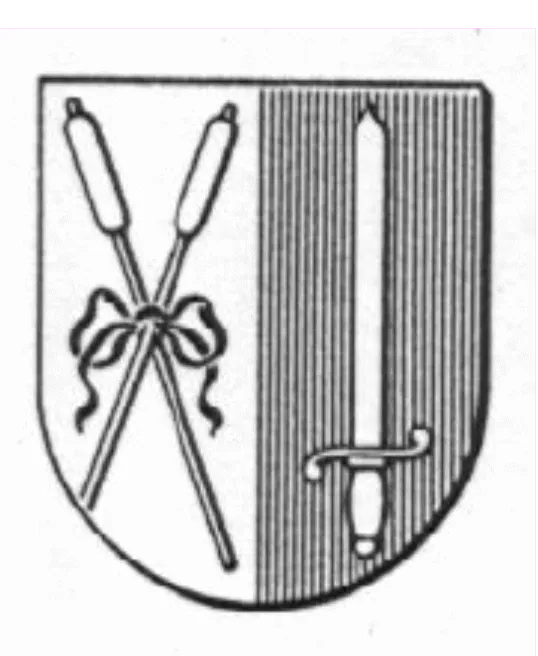
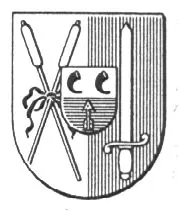
Kingma Beyma Beyma thoe Kingma
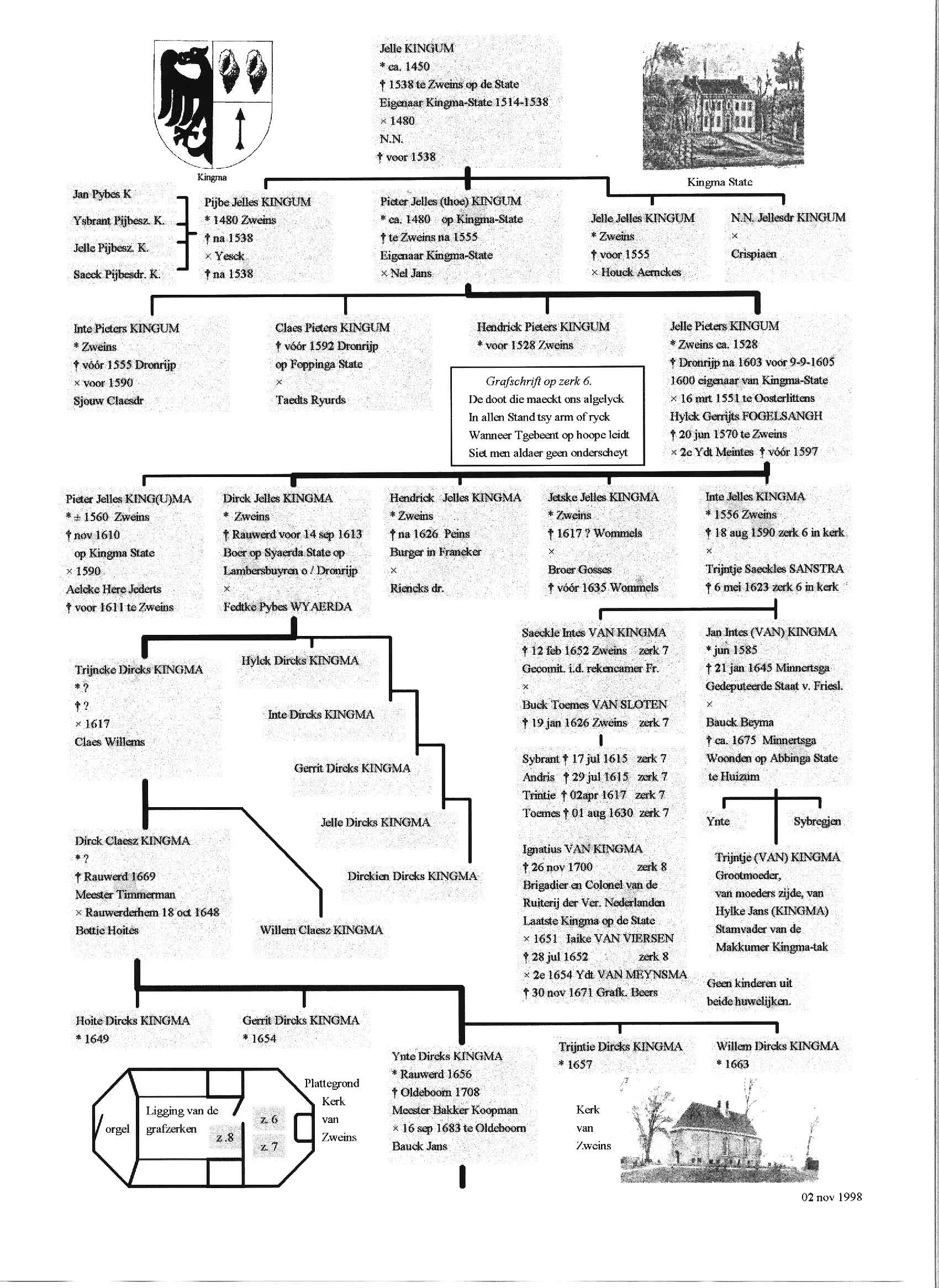
Family tree
The Collapsing Bridge
In the Dijkstraat in Franeker there was a wooden drawbridge, known to the skippers as the Tolbrug. On 6 January 1665 a distinguished company, consisting of twenty-two riders, crossed that bridge. The central figure was a German Imperial Prince, Johan Maurits van Nassau-Siegen. He had been to Leeuwarden to attend the funeral of the Frisian Stadtholder Willem Frederik and was now on his way to Harlingen to embark there bound for Holland. The prince was accompanied by Major Ignatius (Inte) Kingma, who lived at the State in Zweins and served in the army of the United Netherlands.
The residents of Franeker watched with interest when, to everyone's surprise, the bridge collapsed under the force of the horses' hooves. Six riders and their horses fell into the inner canal, among them Johan Maurits and Ignatius. Moreover, they and their horses sank through the ice. Fortunately they could be rescued. The prince was cared for in the Martenahuis and, after his recovery, could continue his journey. A memorial stone commemorates this event, and the Tolbrug was later called the Mauritsbrug.
Friesland in the First Millennium
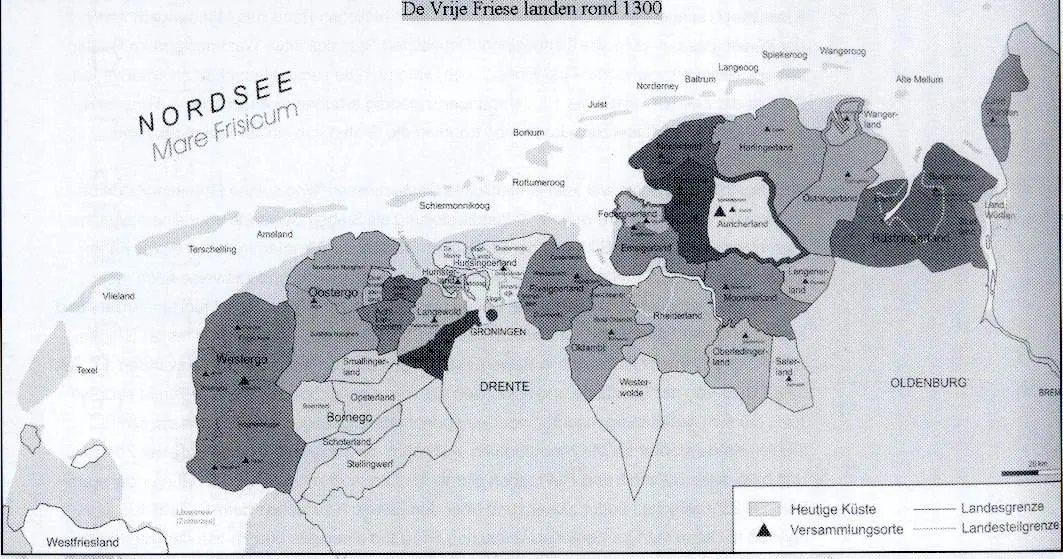
In the early Middle Ages (6th–7th century) Frisians inhabited the coastal strip along the North Sea, from the mouth of the Scheldt to the mouth of the Weser and possibly beyond the present Danish border. It was not a contiguous area but a wet, partly marshy region, divided into a number of centres where kings ruled and played a key role in European trade, especially in luxury goods such as gold. Further inland, Dorestad, later Wijk bij Duurstede, situated at the fork of the Rijn and the Lek, was, in a European context, an important (Frisian) trading centre.
The Frisian sphere of influence was, however, unable to withstand the expansionist pressure of the powerful southern neighbours, the Franks. The influence of this more highly developed Christian state brought about great changes in administrative organization, religion and trade. Wine, glass, pottery and millstones were traded on a large scale via Dorestad and other places by the Frisians to England and Scandinavia, in exchange for slaves, hides, ivory and other goods. The Frisians themselves supplied the famous Frisian cloth and salt.
The disintegration of the Carolingian empire and the repeated Viking raids put an end, in the course of the 9th century, to the heyday of Frisian trade.
The Frisians, however, remained active in trade and navigation. The Frisians living in the western coastal area were later called Hollanders. In a certain sense, then, there is a direct link between the early-medieval seafarers of the North Sea and the great rivers and the entrepreneurs of the Vereenigde Oost-indische Compagnie in the 17th century.
Kingma Kronkels: Memory Loss

Joost Kingma
‘Friesland is losing its memory’ is the headline of an article by Paul Steenhuis in NRC Handelsblad on 3 March last. He describes the gradual disappearance of the terpen (artificial dwelling mounds raised above flood level) in the Frisian countryside and the need to preserve these repositories of Friesland’s cultural heritage.
That looming loss of memory was precisely the reason for founding the Stichting Kingma State on 8 July last year. Digging and searching through what knowledge still remains, we try to let you share in the extraordinarily fascinating history of Kingma State and its inhabitants.
Unfortunately the terp of Kingma State was dug away after the demolition of the house in the mid-19th century. The soil that was freed up could be sold profitably as a soil improver for poor sandy soils elsewhere in the Netherlands, among other things for bulb cultivation on the geestgronden (sandy soils bordering the dunes) in the coastal dune fringe of Holland. The Frisian barge skippers made a good living from it.
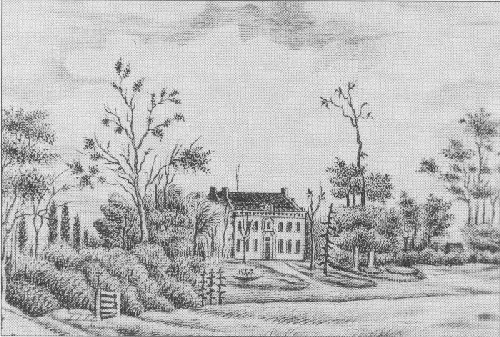
That the demolition of the State meant a great loss for the heritage of the province is evident from the description of the ‘slot’ [manor house], as it is called in Zweins, in the Aardrijkskundig Woordenboek der Nederlanden of 1847:
“Deze state, welke voor dezen galg en rad voerde, maakt thans het grootste sieraad van het dorp Sweins uit. Zij heeft een zeer schoon gebouw en fraaije hovingen, welke eene oppervlakte van 7 bund, 34 v.r. 87 v. ell. beslaan, en thans in eigendom bezeten en bewoond worden door Jonkheer Julius Matthijs van Beyma thoe Kingma, Grietman van Franekeradeel.”
The inhabitants of the State were not always as respectable people as this Julius Matthijs, incidentally. The Recesboek van Franekeradeel contains a deed concerning a lawsuit brought before the court of Franekeradeel on 22 December 1597 between a certain Pyter Taekezn, “tichler”, and the then inhabitants of the State, Jelle Pytersz. Kingum and Pyter Jelles Kingum, over the right of fishing in the vaart between Franeker and the Hornebrug near Dronrijp. The Kingums had held the right to this fishery for more than a hundred years, but apparently Pyter Taekezn had violated it. The ‘gentlemen’ Kingma had acted rather drastically, for they had “tsavonts by nachte aen Pyter Taekezn. hiem gekomen met geladen roeren dselve losgeschoten, ende also hem ende synen familie groot gewalt ende confuys hadden gedaan, scheldende voor een stuck schellem, dieff ende diergelycke.”
The wise judges of Franekeradeel must surely have shaken their heads over such conduct by the Kingmas; they sentenced them to small fines, but confirmed that they had the right to the fishery (conch shells?) in the water in question. This anecdote is described in Kingma, lid van de familie, a book written in 1969 on the occasion of the 100th anniversary of the Kingma’s Bank.
Tough guys, then, those early Kingmas. Men who liked to take action. Straightforward and direct. Few twists and turns — unlike the coils of the conch shells in their (later?) family coat of arms.