
IV De Kinkhoorn
De Kinkhoorn 8 — October 2003
Volume 4, number 2
This issue as pdf (Dutch) · Read the Dutch original · the German translation by Ralf J. Kingma
Foreword
Ignatius still won't let go of us. This time we have a story about one of his principal relations, Maurits van Nassau-Siegen.
More has already been written about Ignatius's career and his cavalry, but a few questions regarding the meaning of some of the ranks he held now seem to have been resolved.
Riders also come up in connection with images on Frisian coins.
Meanwhile our website has been thoroughly revised by Durk Kingma, for which many thanks, because that sort of thing takes a lot of time.
Last summer there was an excellently curated and interesting exhibition to be seen in Emden and Aurich about medieval Frisian freedom, its effects, and the elements that have been preserved to this day. The idea of that Frisian freedom is apparently still very much alive in East Frisia, and in cooperation with the Westerlauwers Frisians, a large number of historical objects from 97 institutions and individuals, from various countries, were brought together and put on display. At the same time a book was also published to which both German and Dutch authors contributed 1 .
I viewed the three exhibitions with great pleasure. Whoever did not go has missed something. You will find a short report in this issue.
Furthermore, preparations for the next Patrons' Afternoon are already well underway, and we hope to see many of you there.
Kees Kingma
1 "Die Friesische Freiheit des Mittelalters – Leben und Legende".
ISBN 3-932206-30-4, 512 pp. Available at bookshops and at the Fryske Akademy.
Maurits the Brazilian and the Kingma cavalry regiment
In Kinkhoorn 7, Veldman mentions twice that Ignatius van Kingma and Johan Maurits van Nassau-Siegen, nicknamed the Brazilian, campaigned together.
In 1665 Ignatius was involved in the accident in which Johan Maurits and his entourage fell through the bridge and then the ice in Franeker on the way back from the funeral of the Frisian stadtholder Willem Frederik. This incident has been described and illustrated in several previous issues of De Kinkhoorn (1, 3 and 5).
Veldman also mentions that colonel Kingma was in command of a cavalry regiment stationed in Muiden in 1672, the disastrous year for the Republic. Here, under the command of field marshal Johan Maurits the Brazilian, the regiment successfully defended Amsterdam and the sluices in the Vecht against the French army.
That made me curious about this scion of Nassau and his relationship with 'our' Ignatius.
Johan Maurits van Nassau-Siegen (1604-1679) played a not insignificant role in the history of the Republic.
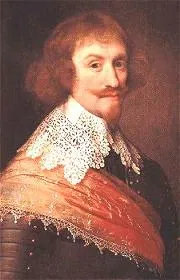
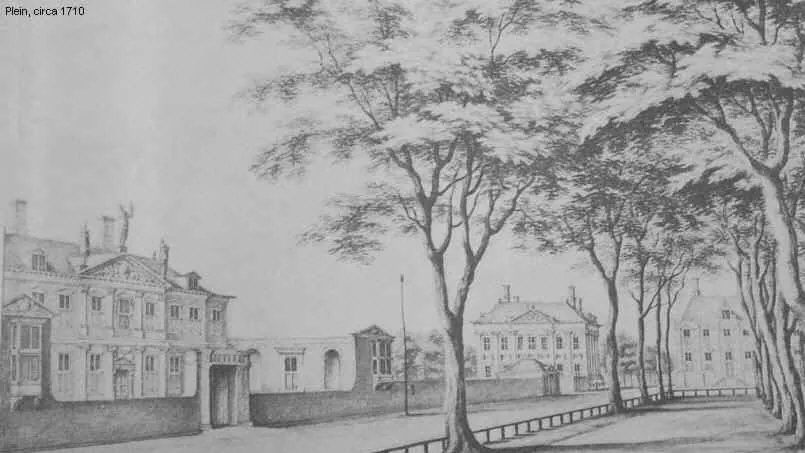
His name still lives on in The Hague today as the builder of the very fine Mauritshuis (1637) next to the Torentje on the Hofvijver.
Johan Maurits was born in 1604 in Dillenburg as the thirteenth child of Count Jan de Middelste van Nassau-Siegen, a first cousin of William of Orange.
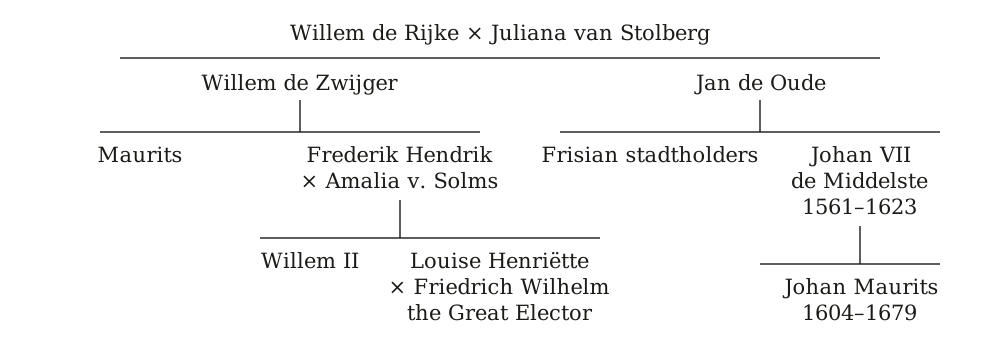
For his military training he was sent to his uncle, the Frisian stadtholder William Louis, in Leeuwarden. On his recommendation he was taken on as a volunteer in a cavalry regiment of his uncle Frederick Henry. In 1626 he became a captain in the States Army, the beginning of a long and successful military career.
In 1632, by then 28 years old and holding the rank of colonel as regimental commander, he bought a piece of land on the Hofvijver in The Hague from the States of Holland for the construction of a house.
He had barely begun construction of his palace in 1636 when he was sent to Brazil by the Dutch West India Company, where the Republic then held several 'steunpunten' (strongholds) (Dutch Brazil, with the capital 'Recife').
Johan Maurits became Governor-General of the Dutch territories there. Neither Maurits' lavish patronage of the arts and sciences, nor his feverish building activities, were much appreciated by the directors of the commercial enterprise, who were focused on sugar and dividends.
Without doubt the Heeren XIX considered their governor-general a costly luxury. However, his popularity and standing among all population groups of the colonial population were so great, and he inspired such awe in his opponents, that it took seven years before they dared to replace him.
Through inheritance Johan Maurits was lord of the County of Nassau-Siegen, but he became known above all as Stadtholder of Cleves from 1647 onwards.

The Elector of Brandenburg appointed him here on account of his administrative and diplomatic experience. Cleves became his residence, and he stayed here for most of the year.

A period of great prosperity began for the town. Among other things, the art-loving stadtholder had the Zwanenburcht renovated in the Dutch baroque style by his master builder Pieter Post. Around the castle he laid out magnificent parks that were emulated in many places, from Berlin to Versailles.

In 1665 Johan Maurits was commander-in-chief of the States army in the Münster campaign, and in 1668 his appointment as field marshal followed.
In the ‘rampjaar’ 1672, the Republic found itself in a precarious position due to simultaneous attacks by the English fleet and the armies of the Bishop of Münster and the French Sun King Louis XIV on the eastern and northern flanks.
The help of the grizzled commander, by then 68 years old, was called upon to oversee the strengthening of the IJssel line. When this proved untenable, he was given command of the defence of the northern flank of the Dutch Waterline from Muiden. Here, in mid-June of that year, he was given command of, among other things, an infantry regiment and two cavalry regiments, including that of colonel Ignatius van Kingma².
The problem, however, was that the cavalry was practically useless in the flooded areas, and that the horsemen, as Bouman describes it, refused to serve as infantry! A touch of Frisian pride?
When Johan Maurits complained about this refusal to Prince William III, the latter wrote back on 27 June that he had given his own cavalry muskets and had them fight on foot in the marshland. Johan Maurits' horsemen had to do the same; if not willingly, then by force. Whether Johan Maurits actually applied coercive measures is not known to Bouman. What is known is that at the end of June the Frisian cavalry regiment of Kingma was recalled to Friesland. But that was probably related to the threat of Münster troops in the North.
The year 1673 began with dangerous threats to Friesland. An attack on the frozen Northern waterline was not among the impossibilities. To bring the Northern commanders into line, William III placed the separately operating armies under a single supreme command and asked the authoritative and diplomatic Maurits to take this upon himself.
Incidentally, the instruction Maurits received from William III for this was a typical example of ‘poldermodel’ thinking avant la lettre: he was to command the troops in the North “met communicatie en goetvinden” of the States of both provinces, and to consult with all and sundry for that purpose.
That summer Maurits managed to repel the combined French-Münster attack, so that the threat to the northern regions temporarily disappeared. The Prince then asked him to reinforce his army in Holland with some Frisian regiments, as he wanted to undertake an attack on Naarden. Johan Maurits was not very keen on this but eventually gave in. The Frisian troops embarked, but by the time they finally arrived in Holland, Naarden had already fallen. Maurits, as Bouman notes, was subsequently grateful that the Prince, after the conquest of Naarden, sent the Kingma cavalry regiment back to him. This was because he still wanted to relieve Coevorden. Once that had happened and the troops withdrew to winter quarters, Maurits felt that he had accomplished his task and returned to The Hague and Cleves. To his houses and country estates, his books and his collections.

In 1676 he retired from active service and died in 1679 at the age of 75, after which his mortal remains were interred in the princely tomb at Siegen.
In 2004 his 400th birthday will be commemorated, among other things, with a gathering of representatives from Brazil, the Netherlands and Germany.
1 C.R. Boxer – De Nederlanders in Brazilië 1624-1654, p. 186
2 P.J. Bouman – Johan Maurits van Nassau, de Braziliaan
Images and information are further derived from:
- H.S. van der Straaten – Maurits de Braziliaan
- A.N.J. Fabius – Een stoere Nassauer; leven en daden van Johan Maurits, den Braziliaan
- Maurits de Braziliaan; exhibition 7 April – 17 May 1953, Mauritshuis, The Hague
Frisian riders
The errata on page 20 of Kinkhoorn 7 refers to "Frisian riders". This was the coin type in which the fine was expressed that Professor van der Wayen had to pay to Ignatius Kingma if he crossed the latter's land (see Kinkhoorn 6). These Frisian riders are gold or silver coins of the Republic of the United Netherlands, which were minted in Friesland.
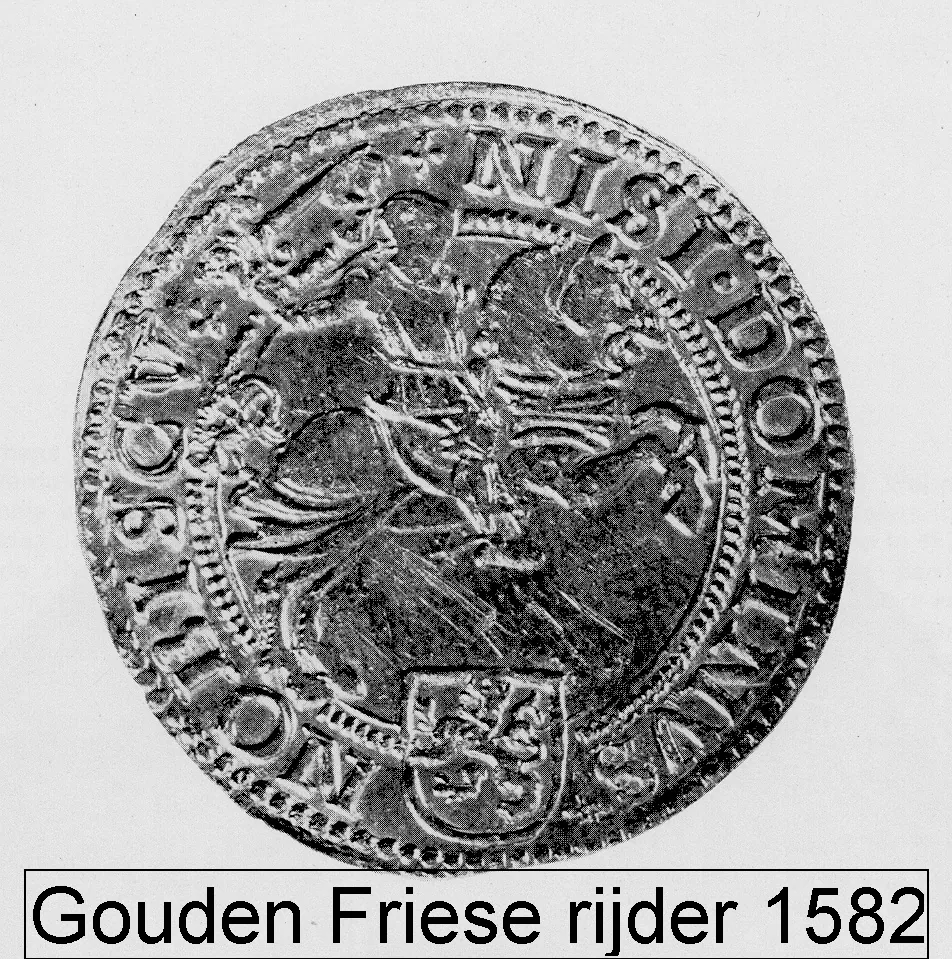
They owe their name to the fact that a man on horseback was depicted on them. The man was an armored knight with a drawn sword.
Gold riders were minted from 1582–1599 and from 1607–1628. 1 Silver riders were minted from 1582–1585. After that, silver riders, then also called ducatoons, were minted from 1659–1668.
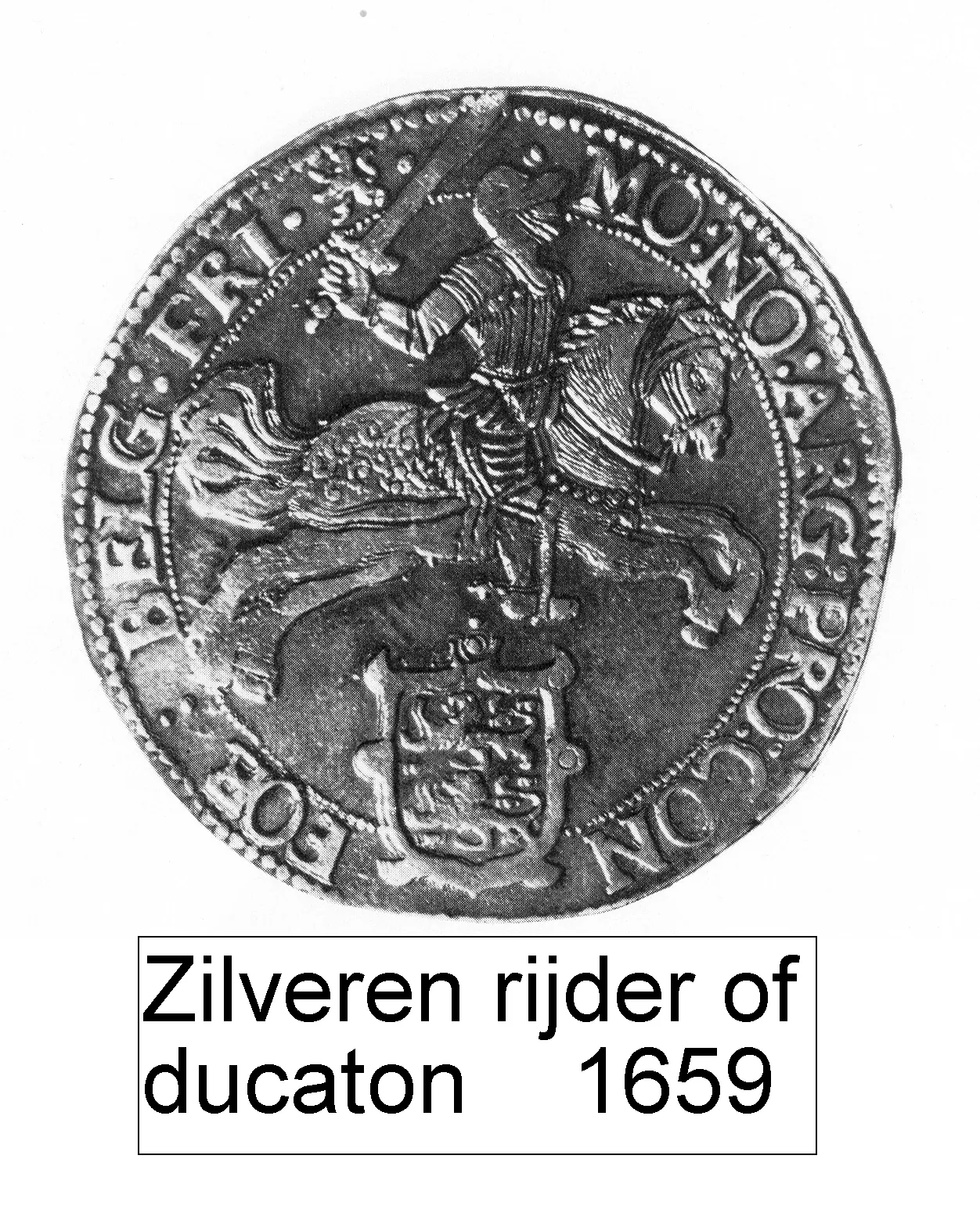
Furthermore, between 1580 and 1738 all kinds of other coins of the Republic of the United Netherlands were minted in Friesland, such as: ducats, reals, rijksdaalders and other daalders, florins, schellings and stuivers.
The minting of coins in Friesland already began between 600 and 700 AD.
From ca. 1420 to ca. 1490 coins were minted by the Frisian towns.
1 From: S.J. van der Molen, "Wat Friese munters sloegen", published by the Friesland Bank.
Ignatius's military career
The report by Mr. Veldman in Kinkhoorn 7 includes an overview of Ignatius's successive ranks. Those ranks raised a number of questions for me. Ignatius starts as a cornet, a non-commissioned rank preceding the lowest officer rank. Then, a year later, follows his appointment to Colonel. This is a highly remarkable meteoric career. Mr. Veldman agrees with me that a big question mark should be placed here.
Then, after Ritmeester (Captain in the cavalry), comes the rank of Sergeant-Major. Nowadays that is a non-commissioned rank — was it the same back then?
In June I was in Coevorden for the introduction of the Hottinger Atlas, an atlas with maps of North and East Netherlands made by military engineers around 1780 1 . On this occasion several talks were given, among others by Dr. O. van Nimwegen, a historian specialized in military history. I asked him at the time how military ranks worked in the 17th century. He told me that the rank of Sergeant-Major at that time was what the rank of Major (Groot-majoor) is now, a rank that comes above Ritmeester or Captain.
When I told him that the rank of Colonel and the rank of Brigadier appeared on Ignatius's gravestone, he explained it as follows. In wartime, a Colonel could be given command over several army units, e.g. cavalry and infantry regiments. In such a case he was also called Brigadier. A rank that is somewhat comparable to what we now call a Brigadier-General.
This has made Ignatius's career a good deal clearer, with the exception of the previously mentioned remaining question mark.
1 A similar atlas with maps of Drenthe and the coast of Friesland and Groningen has likewise been published by Heveskes Uitgeverij in Groningen.
Frisian Freedom
Eala frya Fresena (= greetings, free Frisians)
With this cry, free Frisians greeted one another in the Middle Ages and, it seems, later as well. The cry is said to originate from the Frisians who returned from Italy in the 9th century and who, with "cunning and lion's courage," had defeated the Romans on behalf of King Charlemagne. In gratitude for this, King Charlemagne granted the Frisians the highest good: Freedom.
Legend or not, it is a fact that the Frisians did not live under the feudal system. For Westerlauwers Friesland, as is well known, that ended in 1498, when the Schieringers called on Duke Albrecht of Saxony for help. But for the East Frisians, freedom had already begun to erode earlier, when an elite of wealthy families formed and gained great influence, culminating in 1468 when Ulrich Cirksena received the title of count from the emperor. Nevertheless, the idea of Frisian freedom lives on so strongly in East Frisia that the Ostfriesische Landschaft (a cultural institution), in cooperation with Frisians from the Netherlands, devoted an extensive and beautifully produced exhibition to Frisian freedom last summer, at three different locations.
The main location was the "Johannes a Lasco Bibliothek" in the "Groβe Kirche" in Emden. The library is located on a floor added later within part of the church. The exhibition was set up on the ground floor of this impressive space. Among the 130 items on display were many old documents, archaeological finds, and preserved objects, including, for example, the sword of Grutte Pier (Fries Museum, Leeuwarden) and the armor of Duke Heinrich von Sachsen (1473-1541), hung with the so-called Frisians' Chain. With this chain, the Frisians had wanted to chain Duke Heinrich in 1500, after a successful siege of Franeker. However, they lost the battle, and the duke regarded this trophy as one of his most valuable possessions (Rüstkammer, Staatliche Kunstsammlungen Dresden).
Among the documents was, among other things, the Freedom Privilege of King Sigismund for the Frisians, Konstanz, 30 September 1417 (Tresoar, Leeuwarden, on loan from the Rijksarchief Gelderland).
With this charter, the King confirmed all freedoms and rights granted up to that point and declared western and eastern Lauwers Friesland "reichsunmittelbar," meaning that the Frisian territories fell directly under the authority of the king. But there was also the forged Freedom Privilege of Charlemagne, text from 1300 (Tresoar, Leeuwarden), as well as the Alliance Treaty of all the Frisian regions with King Philip VI of France, bearing the great Totius Frisiae seal, Appingedam, 13 March 1338 (Centre historique des achives nationales, Paris). This document, too, refers to the Frisian freedom (libertas Frisonica) granted by Charlemagne and confirmed by the Pope.
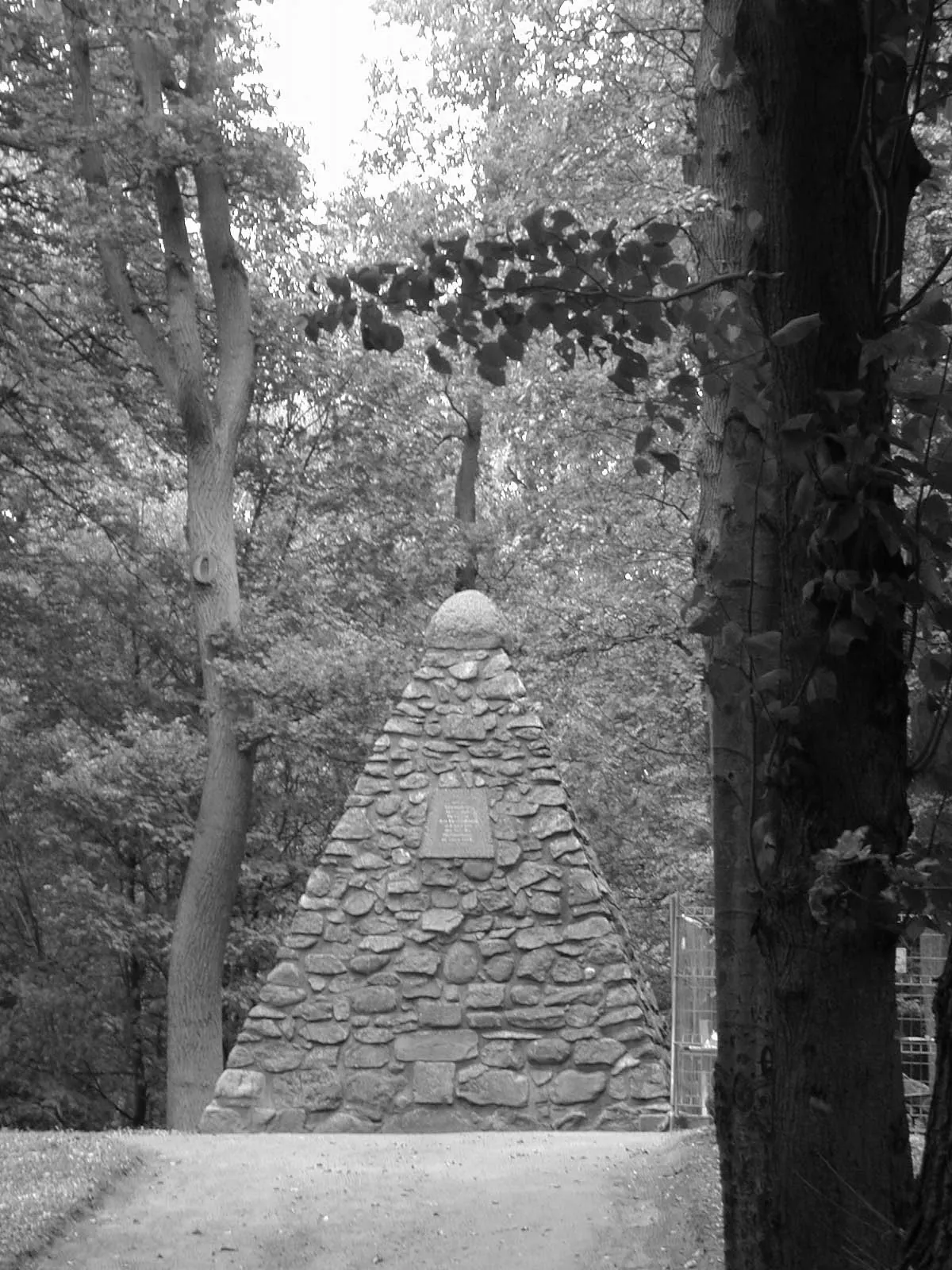
The second exhibition, in the "Historisches Museum" in Aurich, concerns the "Upstalsboom," the historical meeting place where delegates from the Frisian lands gathered once a year, on the Tuesday after Pentecost, in the Middle Ages, to make agreements on matters of common interest. This spot lies on a hill in the woods just outside the village of Rahe, some 4 km southwest of Aurich. A centrally located place that was easily accessible by land and, at the time, also by the Ehe, a tributary of the Ems.
In 1833, a pyramid of boulders was erected here as a reminder of the Union of the Upstalsboom and to mark the spot for the future (see photo). The fence visible behind the tree in the foreground surrounds a pit where further archaeological research is currently underway.
The third exhibition, in the "Ständesaal" in the building of the Ost-Friesische Landschaft, also in Aurich, is devoted to Frisian Freedom and its effects from the Middle Ages to the present. Here, among other things, various portraits could be seen, as well as books such as: Pierus Winsemius, Chronique ofte Historische geschiedenisse van Vrieslant, Franeker 1622 (Ostfriesische Landschaft, Landschaftsbibliothek), and Ubbo Emmius, Rerum frisicarum historiae, Decas 1, Franeker 1596 (Ostfriesische Landschaft, Landschaftsbibliothek).
Kees Kingma
Reborn: the website
After being offline for several months, our website is back. Reborn in an entirely new coat.

The house style of our letterhead has now been consistently carried through into the style of the site.
What has remained is the knock on the door of the State on the homepage. Behind it is a new layout and navigation structure that has been simplified for the visitor.
An important addition to the site is all the articles that have appeared in De Kinkhoorn to date, with the images shown in color where possible. Articles in this and future issues of Kinkhoorn will also be published on the site in the future, albeit with some delay to keep patron membership attractive.
From now on, visitors can respond to the news and content of the site on a 'Comments' page.
Technically, the site has also been greatly improved by allowing access for multiple authors.
Compliments to Durk Kingma, who put a lot of work into building the website.
The new site does not yet have an English version. We are still looking for someone who has the desire and the time to translate the content of the site into English. Guaranteed to be much in demand, since just as many Kingmas live outside the Netherlands as within it.
Wanted: a translator (Dutch-English) for the website.
Interested parties, please contact the undersigned. Joost Kingma (see colophon)
A vanished Kingma inheritance?
Every now and then a story crops up in our country about a large inheritance that did not end up with the rightful heirs. The Neeltje Pater affair is well known.
There is also such a legend (?) in our family of a vanished inheritance. It supposedly concerns the estate of a certain Wybe Kingma. He is said to have become immensely rich as the owner of a tea plantation. According to tradition he died in America. The Dutch East Indies and West Indies were also named as the source of his wealth.
My father (born in 1886) used to tell us that research into this matter had been done in the 1890s. He knew that a certain Timmermans, (former) headmaster of a school in Zeist, had the data from that research in his possession. I managed to get hold of that data at the time. It turned out to be nothing more than a small piece of family tree. It showed that this Timmermans descended from Romke Kingma, born in 1783 as the son of Jacob Jans Kingma (baptized in Birdaard in 1735) and Beitske Jitses. Now, my great-great-grandfather, Jitse Jacobs Kingma, born in 1776, was a brother of that Romke Jacobs Kingma. Who knows, there might still be something in that inheritance for us too, but after so many fruitful generations the portion would already be quite diluted.
Wybe Kingma is said to have left behind a large fortune, but the story goes that it did not reach the lawful heirs. Some of them are said to have traveled to Rotterdam to claim their rights there, but in vain — except, according to rumor, for one of them. That must have been a poor resident of Jislum, who ran a modest coffee and tea trade and later turned out to have become rich, so that malicious tongues claimed he had indeed managed to obtain money but had kept his fellow heirs out of it.
How persistently this story, dating from around 1890, lived on became clear to me when the following item appeared in the Leeuwarder Courant in 1960: "Oude erfeniskwestie opnieuw aan orde. De omstreeks 1890 opgedoken erfeniskwestie, waarvoor de heer B.R. Beute, schilder te Jislum, zich veel moeite heeft getroost, komt thans opnieuw aan de orde. Enkele geïnteresseerden hebben een genealoog aangezocht om een uitvoerig overzicht van de afstamming van de betrokken families samen te stellen. De (onverdeelde) erfenis is afkomstig van een zekere Wybe Kingma, omstreeks 1780 in Amerika overleden, en rechthebbende erfgenamen zijn leden van de in de omgeving van Wanswerd, Jislum en Birdaard wonende families Kingma, Pot, Timmermans, Beute en Talsma."
I never heard anything more about this effort afterward. Did this story subsequently die a quiet death? Or is a great treasure still waiting somewhere for some of the Kingmas etc., and is a very rosy financial future still in store for them one day?
T.J. Kingma, Burgum
P.S.: Incidentally, I have not been able to find that mysterious Wybe in my Kingma genealogy.
Kingma Kronkels: Turbulent

Joost Kingma
The weather was turbulent on 7 October last. The first day of the two-day exploratory archaeological survey on the grounds of Kingma State. Stormy wind, rain squalls, alternating with sunny spells. Together with a number of Kingmas we witnessed the start of the survey and moved along with the drilling crew across the site, sometimes sheltered in the lee of the woods, then again fully exposed to the harsh northwesterly wind. Definitely not the kind of weather that gives you visions of rebuilding the State on that windy spot, as someone in the group remarked.
But that is not the primary aim of the survey, either.
The drill goes into the ground to get a better picture of the historical soil structure and possible traces of habitation, such as remnants of foundations or the location of the moat.
Under the watchful eye of the sheep grazing peacefully on the part of the former moat ring of the State that we have acquired, the survey team from Arcadis carried out a general exploration over the available days. We hope to give our patrons a preliminary report on the results at the autumn gathering on 22 November.
Not turbulently, but certainly alertly, we responded to the draft Regiovisie for the Westergozone. In our letter we indicated that we saw interesting points of connection with the ideas for new stinzen (fortified stone houses) and monasteries, as expressed in the Regiovisie. A possible redevelopment of the State might well fit into that picture.
Interested future residents will then have to be invited on a day with somewhat less turbulent weather.
Colophon
'De Kinkhoorn' is a periodical publication of the Stichting Kingma State.
The periodical is sent to patrons of the foundation.
You can become a patron by transferring an amount of at least 12 Euro annually to account number 55.00.97.538 at ABN AMRO bank in Arnhem, in the name of Treasurer Stichting Kingma State.
Print run: 150 copies.
Published at least twice a year.
Stichting Kingma State
Secretariat:
Sterrenboslaan 20, 3972 GD Driebergen
tel: 0343 521212
fax: 0343 517689
e-mail: kingma@worldonline.nl
website: www.kingmastate.nl
Board
Chairman: C.S.J. Kingma, Emmen
Secretary: J.H. Kingma, Driebergen
Treasurer: J.M. Kingma, Arnhem
Board member: Tj. Kingma, Zwolle
Design and production
Drukkerij Bakker Baarn
This publication is registered with the Koninklijke Bibliotheek under ISSN: 1569-8645