IV De Kinkhoorn
De Kinkhoorn 6 — October 2002
Volume 3, number 2
This issue as pdf (Dutch) · Read the Dutch original · the German translation by Ralf J. Kingma
Foreword
Autumn 2002. Time flies, and we are already preparing for the second donors' gathering in Zweins. But first another new Kinkhoorn. We haven't been sitting idle, and — at least for me, but hopefully for you too — new things have come to light. What intrigued me was that I kept coming across the statement that Kingma State was sold in 1864 and demolished shortly after. I had no reason to doubt the immediate demolition, but had never found proof of it, not even in the extensive Kingma State archive. A tip from Mr. Veldman of Franeker, however, led me to the notarial archives. The deeds of notary Schot from 1864 provided the proof I was looking for, along with the accompanying information. Hence an article on this in this Kinkhoorn.
Furthermore, I will briefly dwell on the, for us so important, “Familiearchief van Beijma thoe Kingma”, or the “Kingma State archive”, its size and its problems.
Then, unfortunately, something sometimes still goes wrong, as happened in the previous Kinkhoorn. The texts travel electronically from writer via secretary to printer. This seems to guarantee that nothing can go wrong along the way. Yet it does. Probably as a result of the fact that the printer uses somewhat different (more professional) software that does not fully match the word processor we use (Word 2000). For instance, in the story about the last inhabitants of Kingma State, some underlined words within quoted passages did not come out underlined, and some italicized parts did not come out italicized. Also, the 1 for the endnote, on page 4 in the second-to-last paragraph after “de Hoge Raad van Adel”, was dropped.
Our apologies for this. We do our best to avoid mistakes.
Kees Kingma
Chairman
Kingma State archive
The Ryksargyf in Leeuwarden uses the name 'Familiearchief van Beyma¹ thoe Kingma' for the archive relating to the residents of Kingma State, their affairs and their possessions. This designation has also been extended with "Kingma-state, 1508-1886". The archive therefore also contains documents from years after the demolition that took place following the public sale in 1864.
The contents of this archive can largely be found in a booklet published in 1908 titled: "Familie-archief van Kingma-state"¹, a better name given the contents. This booklet is, however, not convenient to use because the items are numbered by subject. In 1990 a new list was made at the Ryksargyf called "Toegang 319". This is a consecutively numbered list of all the inventory items of the Kingma-state archive, though the division into subjects has been retained.
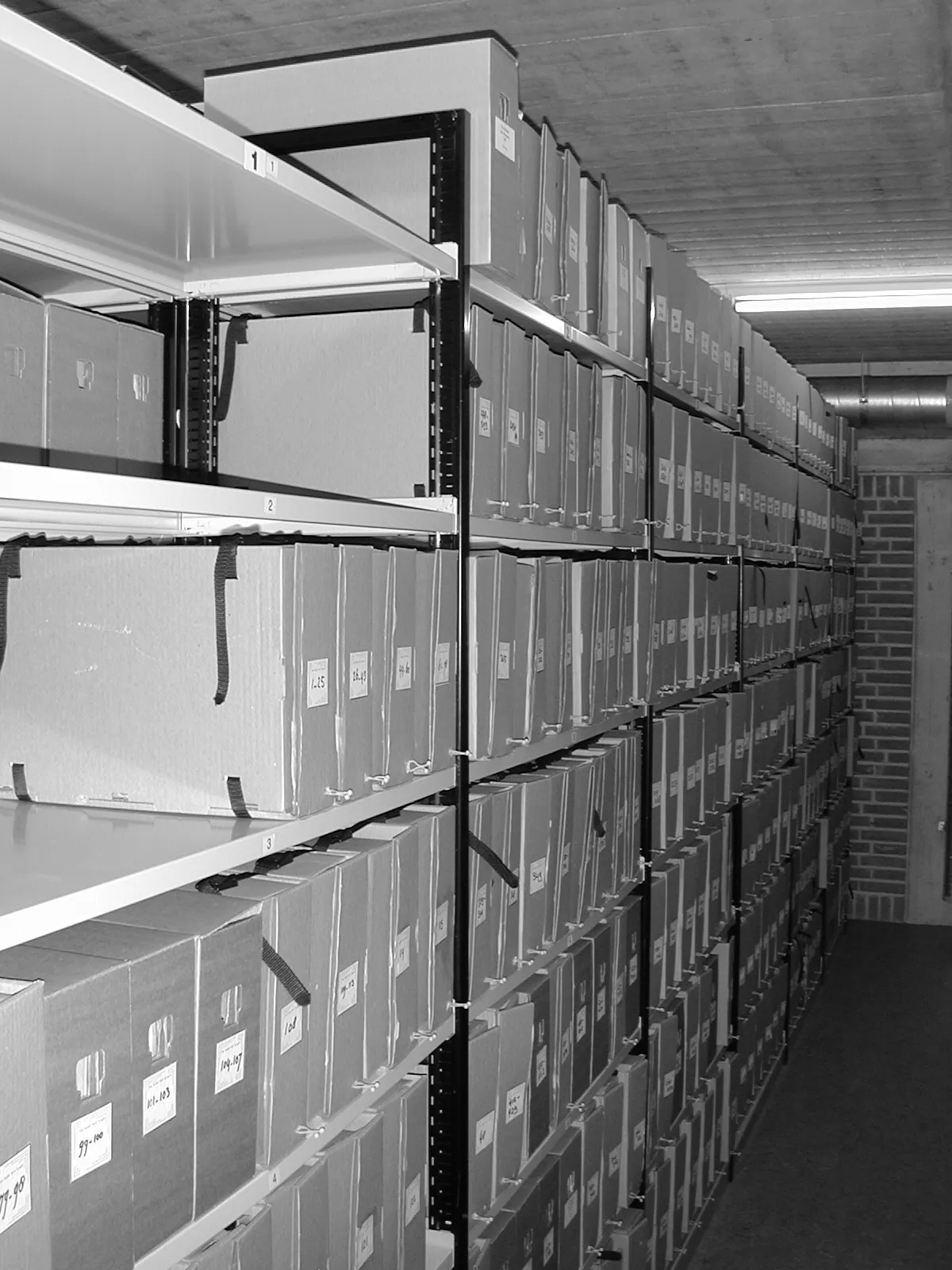
This book is the key to requesting, by means of a computer available in the archive's reading room, one or more of the 2729 inventory items. Some items consist of one or more sheets of paper; other items consist of several parts that together form a thick stack of paper. All these items are stored in Amsterdamse boxes and/or portfolio boxes kept in the part of the archive building that is normally not accessible to the public. The entire Kingma-state archive spans a length of 19.9 meters (see the archive's website²).
It will be clear that studying this abundance of documents is a time-consuming affair. Obviously it is impossible to start at the beginning and search through everything that way. That would take years, especially if you don't live next door to the archive. Ten items a day and 25 days a year already adds up to a period of more than ten years. Making a selection based on the finding aid (toegang 319) is therefore absolutely necessary. Keeping good track of what has and hasn't been looked at is very important here. Given the rather random order of viewing — a result of the selection, which often has to be done more or less at random — notes on paper quickly lead to an unmanageable list. Keeping track in a database that can be sorted by number, however, provides a solution. The brief descriptions in the finding aid often make selecting difficult, so many items still have to be requested for a better assessment. If an item seems important, reading it can be made difficult by the poor condition the item is in, or by poorly legible handwriting (the production of typewriters only began in 1868). It may also be written in an old script, which differs considerably from period to period and is naturally harder to read the older it is. A study of this old script is then of course needed first.
Then there are also items that for one reason or another cannot be consulted, and items that may not be copied because of their fragility. The latter prevents studying them at home, so scarce time in the archive has to be spent on that instead. Photographing instead of copying is then sometimes an option. And on top of that, the distance from my house to the ryksargyf is exactly 100 km, which, given the nature of the road, means 3 hours of driving per visit.
Despite all these problems, the research remains an engaging pursuit, and almost every visit yields some reward in the form of interesting new information. The real result, however, only comes later at home, once the photocopies brought back have been studied and worked out. Because I kept hearing curious questions about what that archive actually looks like, I asked whether I could see it and photograph it. I don't think anyone will expect this to produce a highly fascinating picture, but the curiosity remains all the same. So here, then, is the photo showing a little more than the twenty meters of boxes of the Kingma-state archive.
1 Can be found in the Provinciale Bibliotheek Leeuwarden; book number C7557
2 www.ryksargyf.org / onderzoek / archievenoverzicht / Kingma / Saeckle e.a.
The Notarial Deeds of the Sale of Kingma State in 1864
The notarial profession already existed in Friesland in the Middle Ages, though not everywhere and organized differently than in other provinces. After the Dutch territory was annexed to the French empire, French laws, including those concerning the notarial profession, were declared valid here as of 1 March 1811. This included, among other things, a revival of the old obligation to keep a protocol.
The notary's protocol consists of three elements:
- The minutes, that is, the deeds executed (= drawn up) by the notary relating to, e.g., wills, sales of real estate, etc.
- The repertorium, a register in which all deeds executed by the notary are recorded in chronological order.
- The register of bill protests, which record refusals to accept or pay a bill of exchange. We will, of course, not be concerning ourselves with this last one.
The protocol is the only part of the notarial archive that is transferred (after at least 75 years) to a public archive repository.
In the Ryksargyf in Leeuwarden, the key to the notarial deeds is access number 26. Here one finds the names of the notaries who resided in the territory of present-day Friesland, along with only the numbers of the deeds they drew up. The inventory number of the relevant repertoria is also listed. These are of crucial importance for finding the desired deeds, because they allow one to search for those deeds by date. Knowing the name of the notary and, at the very least, the year of the deed is therefore essential.
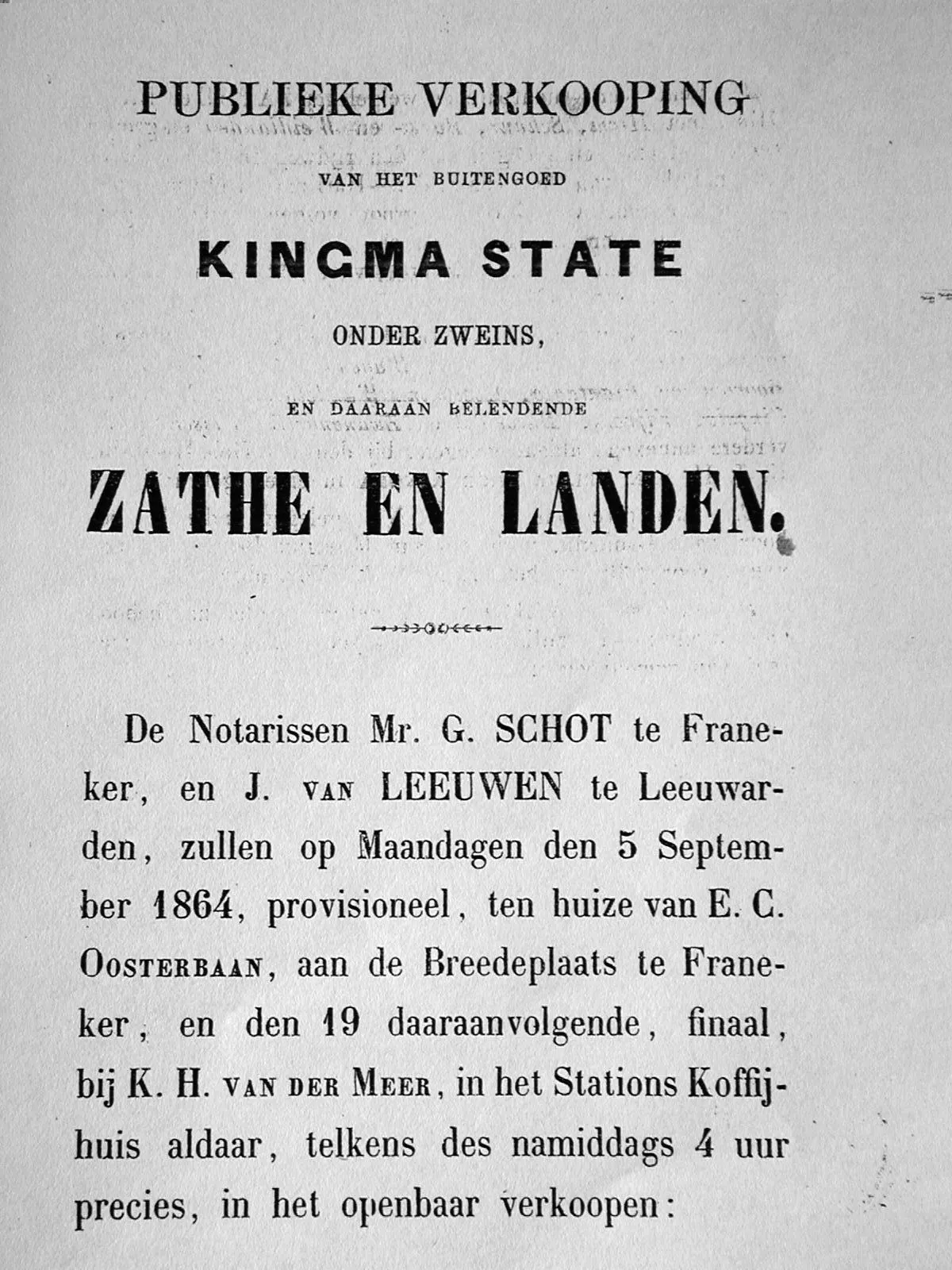
Fortunately, the "sales booklet" regarding the sale of the State was already known 1 and it lists the names of the notaries G. Schot and J. van Leeuwen and the dates of the auctions held (see accompanying photo of page 1 of this booklet).
Four relevant deeds can be found from notary Schot, none from notary van Leeuwen. What this notary's role was is therefore unclear.
In the public sale of houses and lands, three stages can be distinguished: the opening bid ("de inzate") by the seller, the preliminary auction, in which bids are made on the goods to be sold, and the award or allocation, in which the goods are awarded to the highest bidder, who then declares that he accepts the goods. Because the buildings and the parcels of land were auctioned separately, there are not three but five deeds.
The first deed regarding the opening bid is dated 31 August 1864. It is not listed in notary Schot's repertorium, but is attached to a copy of the deed of sale of the buildings as "Extract no. 661 uit het register van voorloopige aangifte van openbare verkooping van roerende 2 goederen". This states where and when the sales take place and that they are at the request of the owner Jhr. Ulbo Jetze Heerma van Beijma thoe Kingma, mayor 3 of Franekeradeel, residing in Franeker. It states that this concerns "bij afbraak te verkoopen het Buitengoed Kingma State".
The extract is signed by the receiver of the registry in Harlingen.
Then, on 5 September 1864 at three o'clock in the afternoon, "overgegaan tot de openbare verkooping op afbraak bij de voorloopige toewijzing van de gebouwen staande op het Buitengoed Kingma State onder Zweins" as deed no. 166 of the preliminary auction states.
Then follows in the deed a list of the 15 conditions under which the auction and the sale take place. Most relate to the finances, such as condition 2: "De koopsom zal moeten worden betaald ten kantore van den vacerende (= zitting houdende) notaris te Franeker in klinkende alhier goed gangbare munt. Zonder voor geld gaande papieren of effecten hoegenaamd of hoe ook geldswaarde verkregen hebbende of zullende verkrijgen op den eersten mei en den eersten november, beide van het volgende jaar, telkens de helft met daar te boven van het onbetaalde eene rente naar vijf procent in het jaar gerekend vanaf den eersten november deses jaars."
Then follow further provisions on an advance payment, surety, the payment of costs, and possible default. Condition 6 states: "De hoed en noed gaan dadelijk bij de eindelijke toewijzing op den kooper over". Here, in an otherwise Dutch text, a Frisian expression is used that means: "care and responsibility".
Also interesting is condition 14: "Het wapen boven de deur behoudt de verkooper aan zich en wordt alzoo niet mede verkocht."
Then follows, as the last, condition 15: "De kooper zal kunnen beginnen af te breken met de gehele huizing op den eersten october deses jaars en met de stalling en arbeiderswoning op den twaalfden november mede van dit jaar, terwijl alles moet zijn weggevoerd op den vijfden maart van het volgende jaar."
Then the deed continues with: "na voorlezing van het vorenstaande is boven omschreven perceel ter beschrijving en voorlopige toewijzing aangeboden waarop als toen het hoogst geboden is door Hette Brouwer, timmerman wonende te Lekkum, de som van tweeduizend vijf honderd zes en tachtig guldens, weshalve ik notaris dit perceel voorloopig in koop heb toegewezen aan gemelden hoogsten bieder voor de door hem geboden som hetwelk door denzelve is geaccepteerd en heb ik den aanwezigen te kennen gegeven dat de finale toewijzing van dit perceel zal plaats hebben op heden over veertien dagen ter zelfder uur ten huize van den kastelein van der Meer in het stationskoffiehuis alhier."
Then follow the names of the two witnesses "Jackele Feddes Weidema, kastelein, wonende te Tzummarum en Hendrik Jaarsma, schoenmaker, wonende te Franeker, beide aan mij notaris bekend …..".
Finally, the signature of the seller (who signs as "Heerma van Beijma thoe Kingma"), the buyer, the two witnesses, and the curious signature of notary G. Schot.
Hette Brouwer is thus now the provisional buyer for ƒ 2586.
Then, on Monday 5 September at four o'clock in the afternoon, follows the preliminary auction of twenty-three parcels.
This includes various plots of meadow or arable land, most located directly adjacent to the State, as well as a house with barn, stabling and hornleger (the yard), close to the bridge at Kingmatille. But also the ground on which the state stood, the garden, the terp (an artificial dwelling mound raised above flood level), the driveway with pavilion (= the "tea house") and the opvaart (the waterway leading to the state).
Fourteen days later, on 19 September at three o'clock in the afternoon, the second auction is held, at which bids can again be made on the buildings of the State. The auctioned goods are then awarded to the highest bidder, who must then declare that he accepts the goods.
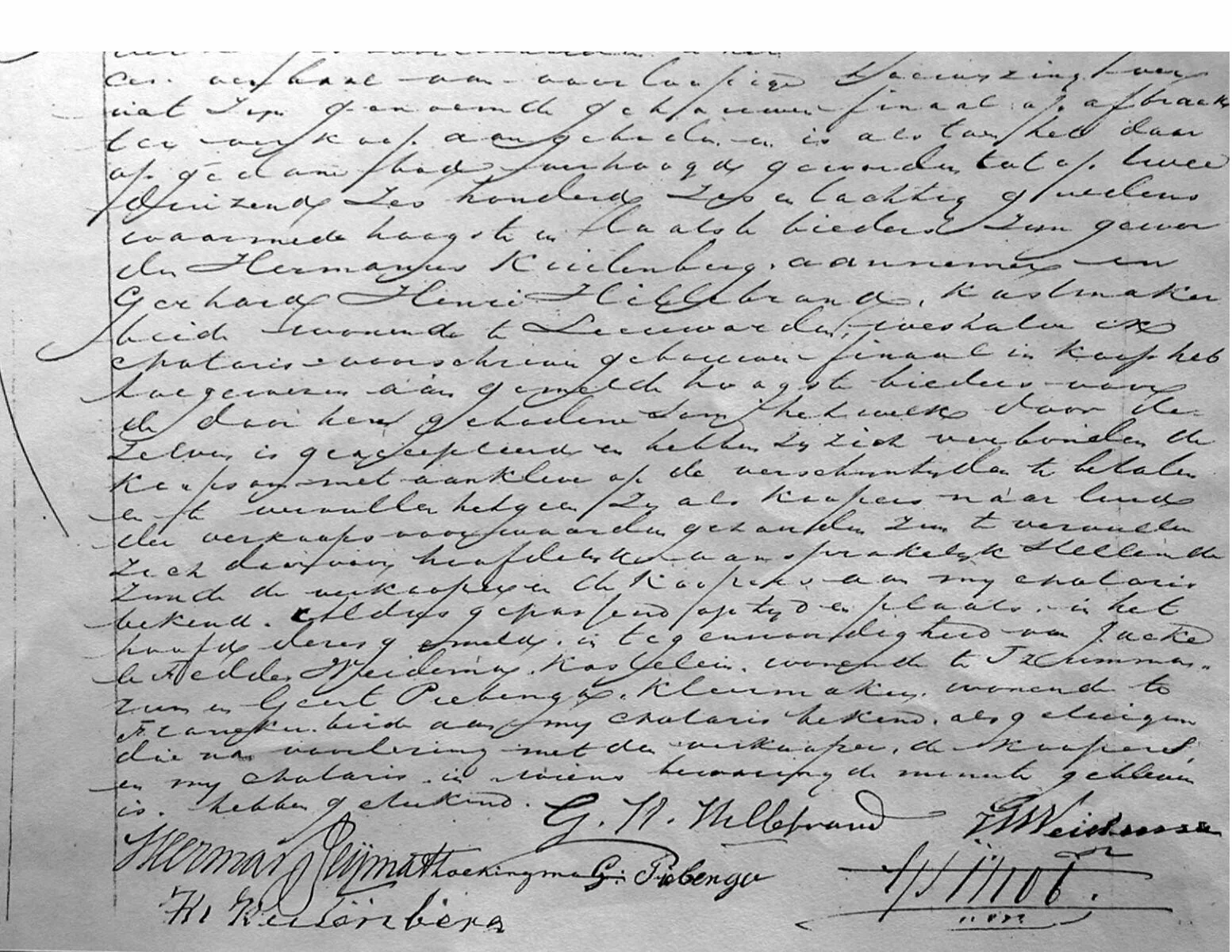
The accompanying deed No. 177 covers only one page and follows below in full.
No. 177 Op heden Maandag den negentienden september des jaars een duizend acht honderd vier en zestig des namiddags om drie uur ten huize van Klaas van der Meer in het stations koffiehuis te Franeker ten verzoeke en in tegenwoordigheid van den Hoogwelgeboren Heer Jonkheer Ulbo Jetze Heerma van Beijma thoe Kingma burgemeester van de gemeente Franekeradeel wonende te Franeker ben ik Meester Gijsbertus Schot Notaris in het eerste arrondissement der provincie Friesland, standplaats Franeker geadsisteerd 4 met nagenoemde twee getuigen, overgegaan tot de openbare verkooping op afbraak bij de eindelijke toewijzing van de gebouwen staande op het buitengoed Kingma State onder Zweins voorlopig toegewezen bij vorenstaand proces verbaal van de vijfde dezer maand voor mij notaris en getuigen gepasseerd : behoorlijk geregistreerd.
Na voorlezing van het vorenstaande en van de verkoopsvoorwaarden in het aangehaalde proces verbaal van voorlopige toewijzing vervat zijn genoemde gebouwen finaal op afbraak ter verkoop aangeboden en is als toen het daar op gedane bod verhoogd geworden tot op twee duizend zeshonderd zes en tachtig guldens waarmede hoogste en laatste bieders zijn geworden Hermanus Kuilenberg, aannemer en Gerhard Henri Hillebrand, kastmaker beide wonende te Leeuwarden, weshalve ik Notaris voorschreven gebouwen finaal in koop heb toegewezen aan gemelde hoogste bieders voor de door hen gebodene som hetwelk door de zelvers is geaccepteerd en hebben zij zich verbonden de koopsom met aankleve op de verschoontijden te betalen en te vervullen hetgeen zij als koopers naar luid der 5 verkoopsvoorwaarden gehouden zijn te vervullen. Zich daarvoor hoofdelijk aansprakelijk stellende zijnde de verkooper en de koopers aan mij notaris bekend. Aldus gepasseerd op tijd en plaats in het hoofd dezes gemeld, in tegenwoordigheid van Jackele Fedde Weidema, kastelein, wonende te Tzummarum en Geert Piebenga, kleermaker, wonende te Franeker, beide aan mij notaris bekend, als getuigen die na voorlezing met den verkooper, de koopers en mij notaris, in wiens bewaring de minuut gebleven is, hebben getekend.
G.H. Hillebrand, J.F. Weidema
Heerma van Beijma thoe Kingma, G. Piebenga
H. Kuilenberg, G. Schot6
What stands out is that the final buyers are different from the provisional buyer and that the new purchase price is only one hundred guilders higher. This gives the impression that the provisional buyer, possibly acting on instructions, merely bid along to drive up the price a little.
That same afternoon at four o'clock, the second auction of the previously mentioned 23 parcels then begins. The two deeds relating to both auctions of these parcels are each 15 pages long. More on that, then, next time.
What, then, is the value of ƒ 2686,- in 1864? On a list sent to me by the Nederlandsche Bank, a price index of 135 7 is given for 1864. In the reference year 1901 this index is 100, and in 2001 it is 2141. That is to say, a particular basket of goods for household expenses and family consumption cost ƒ 135 in 1864 and as much as ƒ 2141 in 2001. The guilder thus apparently rose in value up to 1901. This gives the following calculation: ƒ 2686 / 135 x 2141 = ƒ 42.598.
However, a few remarks should be made about this calculation. First, up to 1994 the determination of the index made use of different price series, such as wholesale prices up to 1871 and, later, the cost of living of families. The composition and quality of the basket underlying the price index figures has also changed over time. On top of that, these price index figures do not hold up well when it comes to investments in, for example, houses or land. On price indices for this kind of thing, the Centraal Bureau voor de Statistiek could only tell me that the prices of real estate have risen by a factor of 58 relative to 1914. If we take this factor into account and work with the consumer price index up to 1914, which was then 109, we get the following calculation: ƒ 2686 / 135 x 109 x 58 = ƒ 125.784. This gives a sum three times as high! But then, let us realize that demolishing a building nowadays only costs money and yields almost nothing. This is because of the use of other types of cement, which means the bricks are no longer suitable for reuse. The timber, too, will no longer fetch as much. In fact, then, this is an attempt to compare things that are not comparable.
1 To be found both in the Provinciale Bibliotheek and in the Ryksargyf.
2 Although this concerns immovable property (buildings and land), the deed speaks of movable goods. According to a notary of today, it is in fact customary to speak of immovable goods when it is only specified later what is meant. The fact that this is a sale for demolition does not make it movable property.
3 In 1851, Thorbecke's Gemeentewet turned the grietman into a burgemeester (mayor).
4 Geadsisteerd = geassisteerd
5 Naar luid der = volgens de
6 See accompanying photo of the last part of this deed
7 The list begins in the year 1785 and can therefore unfortunately not help in determining the sale value of the State in 1611, see Kinkhoorn 4 page 10.
The Clock of Bouke Saakstra
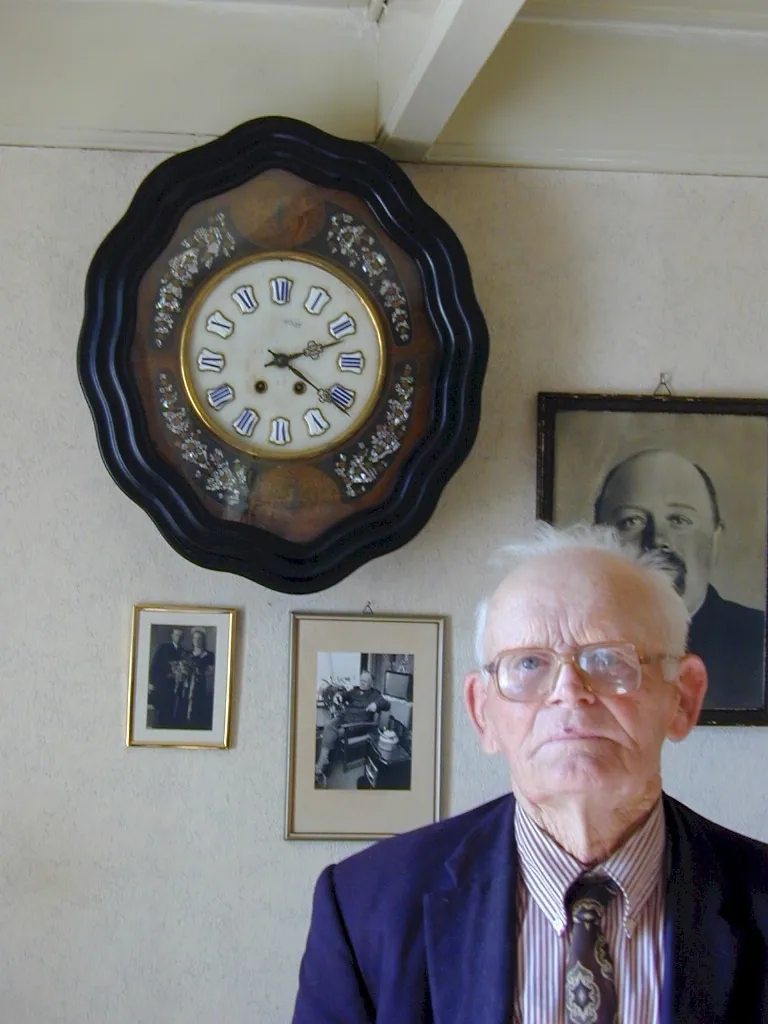
The accompanying picture of a clock and its owner was taken by me in the current home of Bouke Saakstra. According to Saakstra, this clock was once bought by his parents at a *boeldag* (a public auction of household goods). The clock is said to have come from Kingma State.
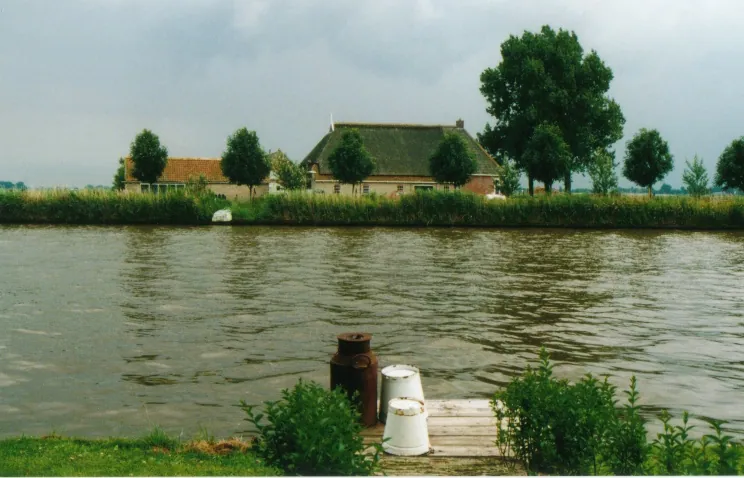
Saakstra was a former resident of Kingmatille. Together with his brother Gerrit he ran the farm that lies on the south side of the Harinxmakanaal, directly across from the "tea house" and the former driveway to the State. Strictly speaking he therefore did not live in Kingmatille (municipality of Franekeradeel), because the area south of the canal belonged to the municipality of Hennaarderadeel, now Littenseradiel. But socially speaking he of course did belong to Kingmatille. He was born in one of the inns of Kingmatille, namely the one with the theater hall, of which his parents were the proprietors. So the clock will have hung in his parents' café.
Saakstra is currently in his late eighties and can still remember a great deal from the days of the old tow-canal with its toll and bridge. This toll and bridge, on a busy shipping route, made Kingmatille a stopping place for skippers, with all the liveliness that brought. There were also shops back then, a baker and a butcher. Kingmatille, or Keimpetille as Saakstra still calls it, has thus changed considerably due to the widening of the tow-canal, in the course of which the bridge disappeared and the name became Harinxmakanaal.
Kees Kingma
Kingma Kronkels: There's a lion in Harlingen

Joost Kingma
It gave us quite a start. When that message came in.
At first you think it's a joke. But the bearer of the message made a serious impression, so that couldn't be it. Nor had we recently heard of a circus that had lost its lion. So we asked further.
Turns out one of the lions belonging to our state (a Frisian manor house with land) is in Harlingen. The Kronkels in the previous installment yielded that knowledge. Not a bad catch, either. But now there appear to have been more than two lions after all. In short, the fate of the lions that adorned the entrance to the State has been partially cleared up, but not entirely.
And there's a Kingma pulpit in Boer. In a little church that looks ready to collapse from sheer misery. Almost hidden from view by the belongings of the artist Launspach, who has his studio there. Every so often he gets a visit from Kingmas who know about that pulpit. He helped us remove the dust so the initials of the apparent donor, Ignatius van Kingma, would show up clearly for the photo.
That our Ignatius, by the way, was not only a god-fearing man but could also stand pretty firmly on his rights, is shown by a note sent to us by Koosje van der Kolk from Emst. She sent us a eulogy on the 'Lustplaats Groot Heerema' by the poet Daniël Willink, written in 1734. From an accompanying note it appears that the then owner of Groot Heerema, professor van der Wayen, had a dispute in 1683 with his neighbor, Ignatius van Kingma, over the right of way. Professor van der Wayen and his servant were denied the right to use the path across the neighboring Kingma estate. They were instructed to use 'de ordinaire weg na de kerke van Sweins door de hecken en over het bovengewagte brugje'. A violation cost him 50 golden Frisian riders. And the professor surely won't have liked that, since he naturally had to travel frequently to his chair at Franeker University. And the shortest route was via the church path that connected Kingma State with Zweins and Groot Heerema. A route that Ignatius himself probably used regularly to go to Leeuwarden, where he surely had to be from time to time in his capacity as colonel. For instance at the Court of the stadtholder or with the gentlemen of the Gedeputeerde Staten (the Provincial Executive Council). A council that, incidentally, in that same year 1683 warned for the second time by means of an edict 'Tegens het onbehoorlijck Suypen en Slempen by de Begraffenisse der Dooden'. Hopefully that didn't happen during that sort of ceremony at the little church in Boer. The artist currently there apparently lives by the spirit of this ordinance: he was sober. Whether sobriety also prevailed during the relocation of our state lion to Harlingen remains to be seen. We'll gladly return to this next time.
Colophon
'De Kinkhoorn' is a periodical publication of the Stichting Kingma State.
The periodical is sent to donors of the foundation.
You can become a donor by transferring an amount of at least 12 Euro annually to account number 55.00.97.538 at ABN AMRO bank in Arnhem, in the name of Treasurer Stichting Kingma State.
Circulation: 150 copies.
Published at least twice a year.
Stichting Kingma State
Secretariat:
Sterrenboslaan 20, 3972 GD Driebergen
tel: 0343 521212
fax: 0343 517689
e-mail: kingma@worldonline.nl
website: www.kingmastate.nl
Board
Chairman: C.S.J. Kingma, Emmen
Secretary: J.H. Kingma, Driebergen
Treasurer: J.M. Kingma, Arnhem
Board member: W.J. Kingma, Valkenswaard
Design and production
Drukkerij Bakker Baarn
This publication is registered with the Koninklijke Bibliotheek under ISSN: 1569-8645