
IV De Kinkhoorn
De Kinkhoorn 19 — April 2009
Volume 10, number 1
This issue as pdf (Dutch) · Read the Dutch original
Foreword
On Saturday 8 November, at the donors' gathering in Zweins, we said farewell to Kees as chairman of Stichting Kingma State. Kees had been chairman for almost 10 years, since 8 July 1999, with the Kingmadag on 8 July 2000 in Zweins as its high point. All those years he did a great deal of historical research into the Kingmas in particular, and published on it in the Kinkhoorn. We owe Kees a great deal of thanks for everything he has done for Stichting Kingma State. It is with great pleasure that I take over the chairmanship from Kees, knowing that he will remain a board member for the time being and will continue his historical research into the Kingmas, and will keep publishing on it through the Kinkhoorn. In this issue of the Kinkhoorn you will find a summary of Hans Mol's presentation on the medieval monasteries of Oostergo and their benefactors. There is also a continuation of the historical maps relating to the Kingmas, and a rounding-off of the published genealogical data. This time these are loose data that may still find a place in the Genealogy of Jelle van Kinghum, and a few branches for which we cannot yet establish a direct connection and where further research may be needed. Any response to the data presented is welcome. In the period ahead, as a foundation we will focus in particular on further completing the genealogy, especially with regard to source citation and correct spelling. In recent years a great deal of historical data has been collected and published in the Kinkhoorn. We will look at whether what is now available offers sufficient material for future publication, and will carry out further research into a number of historical documents (wills). For this further work we will try to involve more people. One of the most important aspects of publication is funding, which will have to come largely through sponsorship. Contributions and ideas are most welcome!
Tjeerd Kingma
Chairman
Zweins and Kingma State on old maps (3): Christiaan Sgrooten and Sibrandus Leo
The previous instalment of this series can be found in De Kinkhoorn 17.
Kees Kingma
The maps of Christiaan Sgrooten from 1573 and 1592
Christiaan Sgrooten was born in 1520 in Sonsbeck (south of Kalkar, Germany). As a cartographer he worked in Kalkar and Antwerp.

In 1558 he made maps of Zutphen and Gelderland. He received an important commission in 1568 from Alva, namely to map the territory of the Netherlands. In 1573 he delivered 38 manuscript maps bound in an atlas. The fifth map of this so-called 'Brussels atlas' covers North Holland, the Zuiderzee and Friesland. See the accompanying photograph, which I took of a map from the 1961 reprint of this atlas, published by E.J. Brill in Leiden. The cartouche in the lower right-hand corner has not been filled in.
The maps were rejected by a commission under Alva's leadership, and Sgrooten was instructed to redo his work.
Because of the war situation, it took until 1592 before Christiaan Sgrooten could deliver his second atlas, distinguished as the 'Madrid atlas', likewise with 38 maps. This atlas, with more accurate and more extensive maps of 83 x 136 cm across two pages, was so large and heavy that it could only be carried by two adult persons. This atlas is held in the National Library in Madrid.
Christiaan Sgrooten's maps are so strongly based on those of Jacob van Deventer that they are classed in the same group.

The trekvaart (tow canal) from Harlingen to Leeuwarden is shown as an almost straight line, which does not entirely correspond to reality. The villages are indicated with a little church.
Zweins, here called Sweyns, appears to lie right on the trekvaart.

The map of Sibrandus Leo from 1579

Sibrandus Leo (c. 1530–1588) was a canon of the Premonstratensian abbey at Lidlum. He also wrote two chronicles about the monasteries of Mariëngaarde and Lidlum. His map is the first showing exclusively the area of present-day Friesland and Groningen. Compared with the map of Jacob van Deventer, his map, the so-called 'Peacock Map' ('Pauwenkaart'), is less accurate, especially regarding the location of the villages and the various waterways. The towns are shown with a profile, and the villages only with a small circle.

For the first time the "Noordt Zee" [North Sea] is mentioned. The Wadden Sea, called "'tWad" on Van Deventer's map, is here given as "Twadt".
A handful of names of people (states or farms?) are given, but not Kingma State. East of "Franicker", in a bend of the trekvaart, two small circles are drawn, close together, without mention of the village names. This might refer to Zweins and Kingmatille, but that is not certain.
Genealogy of the Kingmas to c. 1700 (3): additional data
Below, a number of Kingmas are listed from before 1700, for whom no direct relationship can immediately be established with the ancestral line of Jelle van Kinghum.
Should anyone have additional information about these people, we would ask you to pass it on to Tjeerd Kingma (tj.kingma@planet.nl)
Tyal Pieters Kingma, mother of the children of Wybe Tyaerds, is mentioned in 1606.
Births according to the Tresoar archives
Ferwerderadeel, baptisms, baptism year 1707
Baptized: Neeltje
Baptized on 13 March 1707 in Ferwerd
Daughter of Heere Kingma and an unnamed mother
Leeuwarden, baptisms, baptism year 1639
Baptized: Marten
Baptized on 20 March 1639 in Leeuwarden
Child of Kingma and an unnamed mother
Leeuwarden, baptisms, baptism year 1693
Baptized: Antie
Baptized on 19 February 1693 in Leeuwarden Child of Jan Kingma, master baker and an unnamed mother
Leeuwarden, baptisms, baptism year 1694
Baptized: Peterus
Baptized on 26 September 1694 in Leeuwarden
Son of Jan Kingma, master baker and an unnamed mother
Leeuwarden, baptisms, baptism year 1695
Baptized: Anna
Baptized on 6 November 1695 in Leeuwarden
Child of Jan Kingma, master baker and an unnamed mother
Leeuwarden, baptisms, baptism year 1697
Baptized: Freeck
Baptized on 27 January 1697 in Leeuwarden
Son of Jan Kingma and an unnamed mother
Leeuwarden, baptisms, baptism year 1699
Baptized: Jancke
Baptized on 8 October 1699 in Leeuwarden
Child of Jan Kingma, master baker and an unnamed mother
Franekeradeel, baptisms, baptism year 1678
Baptized: Sibrichien
Baptized on 8 May 1678 in Midlum
Child of an unnamed father and Sibrichien Jans Kingma
Franekeradeel, baptisms, baptism year 1652
Baptized: Teeckle
Baptized on 26 December 1652 in Tzum
Son of an unnamed father and an unnamed mother
Godparent: Ulbe Jintes Kingma
Franeker, baptisms, baptism year 1665
Baptized: Fokeltie
Baptized on 13 August 1665 in Franeker
Daughter of Rieurd Kingma, Mr. and an unnamed mother
Franeker, baptisms, baptism year 1666
Baptized: Inte Rieurds Kingma, mayor deser stede
Baptized upon confession of faith on 5 July 1666 in Franeker
Son of an unnamed father and an unnamed mother
Franeker, baptisms, baptism year 1669
Baptized: Anna Catharina
Baptized on 26 December 1669 in Franeker
Child of Rieurd Kingma, Mr. and an unnamed mother
Franeker, baptisms, baptism year 1671
Baptized: Ydtie
Baptized on 16 July 1671 in Franeker
Daughter of Rieurd Kingma, Mr. and an unnamed mother
Franeker, baptisms, baptism year 1671
Baptized: Gretske
Baptized on 16 July 1671 in Franeker
Daughter of Rieurd Kingma, Mr. and an unnamed mother
Franeker, baptisms, baptism year 1673
Baptized: Inte
Baptized on 16 March 1673 in Franeker
Son of Ruurdt Intes Kingma, Mr. and an unnamed mother
Franeker, baptisms, baptism year 1675
Baptized: Marten
Baptized on 21 November 1675 in Franeker
Child of Ruurd Intes Kingma, Mr. and an unnamed mother
Franeker, baptisms, baptism year 1679
Baptized: Marten
Baptized on 12 January 1679 in Franeker
Child of Ruurdt Intes Kingma and an unnamed mother
Bolsward, baptisms, baptism year 1700
Baptized: Janke
Baptized on 23 January 1700 in Bolsward
Child of Klaas Kingma and an unnamed mother
Sneek, baptisms, baptism year 1653
Baptized: Jancke
Baptized on 14 December 1653 in Sneek
Child of Gerryt Bualda and Aeltie Kingma
Sneek, baptisms, baptism year 1656
Baptized: Dirckien
Baptized on 27 November 1656 in Sneek
Daughter of Hopperus Aetes, candidate and Antie Kingma
Marriages according to the Tresoar archives
Baarderadeel, marriages 1664
Entry: Confirmation of marriage on 23 September 1664 in Winsum
Groom: Ruardus Kingma, from Franeker
Bride: Anna Cathrina Schotanus, from Sneek
Note: he is a master surgeon
Leeuwarden, marriages 1653
Entry: Confirmation of marriage on 31 July 1653
Groom: Pieter Ruyrds, from Leeuwarden
Bride: Antie Kingma, from Leeuwarden
Leeuwarden, marriages 1656
Entry: Banns registered on 6 September 1656
Groom: Thijs Piers, from Leeuwarden
Bride: Antie Kingma, from Leeuwarden
Note: he is a gemeensman (a citizens' representative on the town council)
Leeuwarden, marriages 1677
Entry: Confirmation of marriage on 16 December 1677
Groom: Gangeloff Upkes Hooghacker
Bride: Antie Kingma
Note: she is the widow of Tijs Piers
Leeuwarden, marriages 1688
Entry: Confirmation of marriage on 23 January 1688
Groom: Paulus Schouwen, from Leeuwarden
Bride: Jancke Kingma, from Leeuwarden
Note: he is a public notary
Leeuwarden, marriages 1689
Entry: Confirmation of marriage on 4 August 1689
Groom: Jan Kingma, from Leeuwarden
Bride: Janke Freerks, from Leeuwarden
Note: he is a master baker
Harlingen, marriages 1657
Entry: Confirmation of marriage on 5 November 1657
Groom: Jan Schrael, from Harlingen
Bride: Rinscke Ruyerts Kingma, from Harlingen
Note: soldier
Franeker, marriages 1668
Record: Confirmation of marriage on 22 April 1668
Husband: Rieurd Intes Kingma
Wife: Aafke Martens, from Franeker
Note: master surgeon
Bolsward, marriages 1699
Record: Confirmation of marriage on 14 May 1699
Husband: Nicolaus Kingma
Wife: Arjaantie Arjans Postumus
Note: soldier
Wymbritseradeel, marriages 1651
Record: Confirmation of marriage on 21 November 1651
Husband: Gerryt Dirks, from Jorwerd
Wife: Aeltie Kingma, from Sneek; she died there on 7 August 1710.
Death according to data from Tresoar
Leeuwarden deaths/burials 1690
Buried: a child of Jan Kingma, master baker
Date: 9 December 1690
Buried at the Oldehoofsterkerkhof
Leeuwarden deaths/burials 1692
Buried: a child of Jan Kingma
Date: 4 March 1692
Buried at the Westerkerkhof
Genealogy of Bernardus Johannes Kingma up to ± 1700
Certain deeds show that Bernardus Kingma had a sister, Jeltje Johannes Kingma, and a brother, Pytter Johannes Kingma. This Pytter Johannes Kingma might possibly be the same person as Pieter Johannes Kingma (see VI.11), son of Johannes Pieter Kingma (V.8) and Gatske Wybrens Buma, which would establish the link with Jelle Kinghum. Unfortunately there is no direct evidence for this and it will need further research.
The information below has partly been taken from the booklet “Mijn Voorouders Kingma” by Mrs F. Thoomes-Kingma, the website of Ruud de Bruijn, and information from Wubbo Daniëls of Sneek.
I.1 Bernardus Johannes KINGMA, born around 1623 in Engwierum, died after 1677, Auth. Kol 1592-1672, B.15, 1704, 5.6.1660 records Bernardus and Pyter Kingma as guardians of the orphaned children of Jeltje Johannes (deceased before 5.6.1660) by Jetse Jans, living at Ketingawier under Westergeest, Auth. Kol. 1592-1672 B.15, 1739, 12.6.1662 records Bernardus as full brother of Jeltje Kingma and guardian of Aucke Jetses, b. 1637, and Neeltje Jetses, a minor in 1662.
Guardian of Arien Pyters, 17 years old, b. 1650 (OOD Auth. 18.3.1667, acte 245), stepfather and guardian of Fooke Lieuwes, 23 years old, b. 1641, and Dirk Lieuwes, 19 years old, b. 1645 (OOD Auth. 1656-1685, acte 72, 22-5-1653/acte 184, 11.6.1664), lived at "Doniastate" in Engwierum, later leased a farmstead in Morra where he married his second wife. Married (1) on 11-5-1649 in Engwierum to Trijntje DIRKS, born 1618, died on 24-01-1658 (see gravestone in Engwierum), see Auth Kol. 1592-1672, 23.1.1641 acte 1286 and acte 1296, 31.3.1641, daughter of Dirk PYTERS and Hiltje PYTERS. She is the widow of Lieuwe Fockes Donia (1591-1649). Married (2) to Tietske Tietis. From the first marriage:
| 1. | Trijntje Bernardus (see II.1). |
| 2. | Grietje Bernardus, deed of 22.10.1662 in which Wijbe Annes buys land from Grietje Bernardus. From the second marriage: |
| 3. | Ydtie Bernardus (see II.2). |
| 4. | Saakje Bernardus (see II.3 |
| 5. | Mayke Bernardus (see II.4). |
II.1 Trijntje Bernardus KINGMA, born circa 1651, died 1687, see Auth OOD, acte 72, 22.5.1658. Daughter of Bernardus Johannes KINGMA (see I.1) and Trijntje DIRKS. Married (1) on 10-03-1667 in Engwierum; husband is Arrien PYTERS, born circa 1650, died before 1673, son of Pieter ARRIëNS and Sibbel OENSES. Married (2) 1673 to Gerrit GERRITS, receiver and village magistrate in Engwierum, died before 1694. From the first marriage:
| 1. | Pieter Arriëns (see III.8). |
From the second marriage:
| 2. | Antie, born circa 1675. |
| 3. | Arrien (see III.11). |
| 4. | Lieuwe, born circa 1681. |
| 5. | Hiltje, born circa 1684. |
| 6. | Trijntje, born circa 1687. |
II.2 Ydtie Bernardus KINGMA, died on 28-06-1713. Aut. OOD 1656-1811 acte 7.10.1689, about 18 years old, guardian Joannis Jelles, master tailor in Lioesens, daughter of Bernardus Johannes KINGMA (see I.1) and Tietske Tietis. Married to Anne MINSES. From this marriage:
| 1. | Minse Annes KINGMA (see III.18). |
II.3 Saakje Bernardus KINGMA, daughter of Bernardus Johannes KINGMA (see I.1) and Tietske Tietis. Married (1) circa 1689 to Tjepke DIRKS. Auth. OOD 1656-1811 acte 148, 2.6.1704, guardian is Jacob Douwes of Lioesens. Married (2) circa 1692 to Binnert LOLKES. Auth. OOD 1656-1811, acte 147, 2.6.1704, guardian is Sybren Theunis of Morra. From the first marriage:
| 1. | Baukje TJEPKES. |
From the second marriage:
| 2. | Aaltje BINNERTS, born 1693. |
| 3. | Tiete BINNERTS, born 1695. |
II.4 Mayke Bernardus KINGMA, daughter of Bernardus Johannes KINGMA (see I.1) and Tietske Tietis. Married on 24-03-1695 in Ee; husband is Cornelis DOUWES. From this marriage:
| 1. | Douwe CORNELIS, baptized on 01-03-1696 in Ee |
| 2. | Pyttie CORNELIS, baptized on 07-04-1699 in Ee |
| 3. | Pyttie CORNELIS, baptized on 23-06-1700 in Ee |
| 4. | Pyttie CORNELIS, baptized on 17-07-1701 in Ee |
| 5. | Pyter CORNELIS, baptized on 08-10-1702 in Ee |
| 6. | Tiete CORNELIS, baptized on 22-02-1705 in Ee |
| 7. | Pyttie CORNELIS, baptized on 19-12-1706 in Ee |
| 8. | Jetske CORNELIS, baptized on 12-08-1708 in Ee |
| 9. | Nyncke CORNELIS, baptized on 14-12-1710 in Ee |
III.8 Pieter Ariëns, born 1668 at Berghwegen under Engwierum, died on 14-08-1738 in Dokkum (see gravestone Dokkum), see Auth.OOD, p.23, acte 80, 16.7.1694, proc.post and citizen of Dokkum; Pieter Arriëns would later call himself Petrus Berghsma and, thanks to profits from trade with the East Indies, would develop into a major landowner in the Dongeradelen. His son Willem became secretary of Oostdongeradeel, but his attempts to be appointed grietman (the head of a Frisian grietenij, roughly comparable to a district magistrate) were thwarted by the Frisian nobility. Genealogisch Jaarboekje 1993, p.53, Auth OOD p.23, acte 80, 16.7.1694, Jan Gerrits and Pyter Bergsma, guardians of the children of Gerrits and Trijntje B. Kingma, son of Arrien PYTERS and Trijntje Bernardus KINGMA (see VII.14). Married on 19-04-1696 in Metslawier; wife is Catryne WINDT. From this marriage:
| 1. | Eise PYTERS. |
| 2. | Arjen PYTERS. |
| 3. | Katharina PYTERS. |
| 4. | Wilhelmina PYTERS. |
| 5. | Bernardus PYTERS. |
III.11 Arrien GERRITS, born circa 1677. (The question is whether the Arjen Gerrits who married Antje Klazes in Anjum on 3.11.1695 and had the children Jacob, bapt. Anjum 13.3.1701, and Minne, bapt. Anjum 19.4.1704, baptized there, is the same person as this Arrien Kingma. On 16.7.1708 an Arjen Gerrits also married Lijsbeth Johannes, and on 16.11.1727 an Arjen Gerrits married Iebeltje Schotanus, b. ca. 1685, daughter of Bernardus Schotanus and Catharina Fortius; she remarried on 28.10.1729 in Anjum to Pyter Pyters of Ferwerd), son of Gerrit GERRITS and Trijntje Bernardus KINGMA (see II.1). Married (1) on 03-11-1695 in Anjum; wife is Antie KLAZES, 21 years old, baptized on 13-09-1674 in Ee. Married (2) on 16-06-1708 in Anjum; wife is Lijsbeth JOHANNES. Married (3) to Iebeltje BERNARDUS. From the first marriage:
| 1. | Gerrit ARJENS, born around 1700 in Anjum |
| 2. | Jacob ARRIENS, baptized on 13-03-1701 in Anjum |
| 3. | Minne ARRIENS, baptized on 19-04-1704 in Anjum |
Genealogy of Johannes Kingma
Johannes might possibly be a son of Johannes Pieter Kingma (see V.8) and Gatske Wybrens Buma; however, we see that he did not name his son after his father. RA FER C1 221v. In 1674 a dispute plays out between Joannes Kingma and Pyter Kingma. It is not clear what this concerns. Possibly a lawsuit between two brothers. It is also possible that the brother of Bernardus Johannes Kingma, Pytter Johannes Kingma, is meant.
I.1 Johannes KINGMA, farmer and landowner in Reitsum, died probably shortly before 1681. Married to Antie PYTERS before 1667. vBtK 1818. In 1667 Johannis Kingma and Antie Pyters, a married couple within the klokslag (the parish area defined by the reach of the church bell) of Reitsum, borrowed 1700 gold guilders from Anthonius Jennema, a citizen/merchant of Amsterdam, to pay a first instalment for the sate (=farm) they had bought in Reitsum, at an interest rate of 6% per year. The repayments are recorded in the margins of the deed. In 1675 Johannes sold the dwelling house to carpenter Willem Jansen. In 1676 he made the repayment in kind. The same year the claim was ceded to Gerolt Aebbe Smedingh. In 1678 Hoite Jarigs paid off ƒ560 on behalf of Johannes Kingma; in 1681 another 400 gold guilders. And then there is mention of further liquidation. HvF WW66 1.2.1676 no.50. In 1676 Johannes Kingma of Genum was denied a stay of execution by the Court of Friesland, and his claim against Anthonius Jennema, mayor of Dokkum, was declared not “ontfangbaer”.
From this marriage:
| 1. | Pieter Johannes (see II.1). |
II.1 Pieter Johannes KINGMA, born circa 1678, son of Johannes KINGMA (see I.1) and Antie PYTERS. Married circa 1698 to Martjen BOTTES, born circa 1678. From this marriage:
| 1. | Antje, born 1699 in Janum. |
The medieval monasteries of Westergo
Impressions from the talk by prof. J.A. (Hans) Mol on 8 November 2008 in Zweins
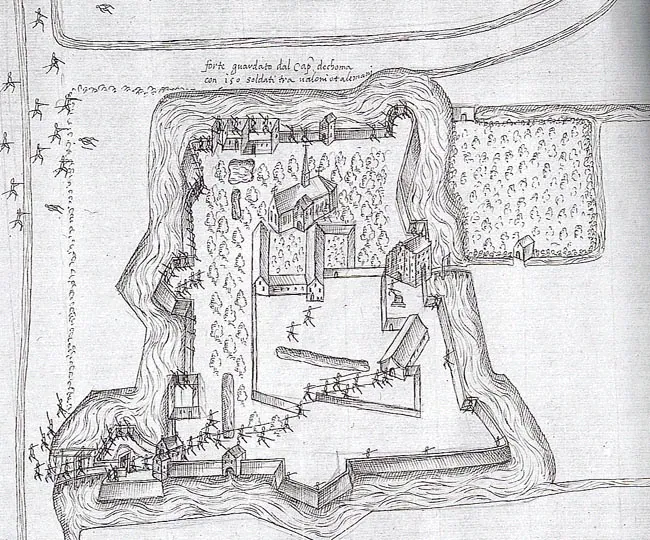
“In the late Middle Ages, Friesland was a political oddity in Europe. This long but narrow coastal strip along the North Sea had not been subject to a territorial lord since it resisted feudalization in the thirteenth century. The numerous sub-regions into which the area was divided, governed in a semi-communal way by elites of nobles and freehold farmers, managed for a long time to preserve their autonomy, which had major effects on society as a whole. Because a state apparatus was lacking, conflicts had to be resolved through feuding or arbitration, which gave the Church the opportunity to claim a leading role for itself as keeper of the peace. I remain fascinated by this society, which, despite its archaic features, achieved a relatively high degree of organization. By studying it as if in a mirror, I also hope to shed new light on the conditions under which structural developments could take place elsewhere in Europe. In the coming years I want to focus on the theme of Power, Possession and the Church.”
In this way, professor Hans Mol describes on the website of Leiden University how he became fascinated by the power position of monasteries in medieval Friesland. During the autumn gathering on Saturday 8 November 2008, he shared his knowledge on this subject in an inspiring lecture with more than thirty donors of the foundation.
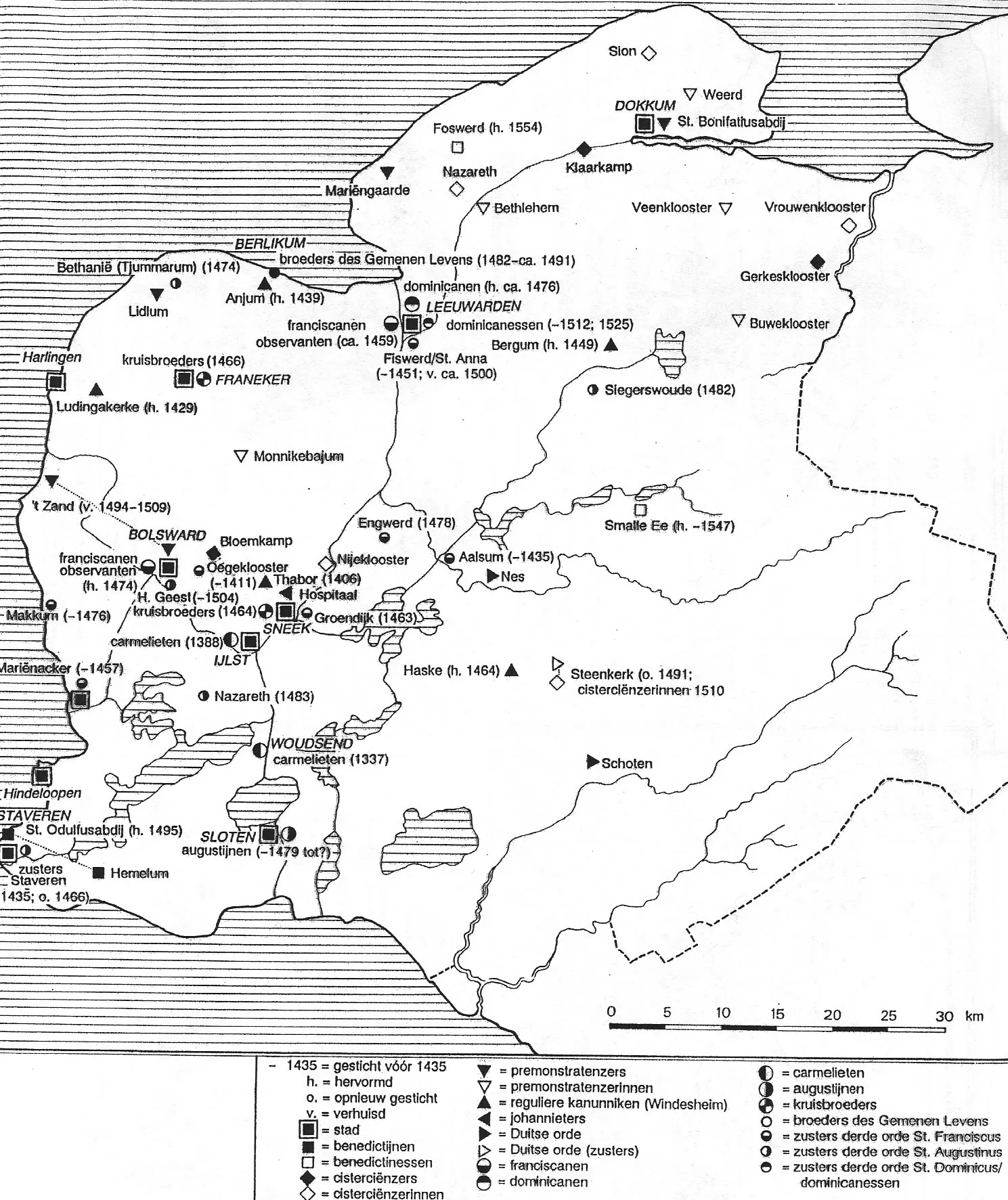
In the second half of the Middle Ages, Westerlauwers Friesland had a large number of monasteries and granges belonging to various religious orders.
Important orders were the Benedictines and the Cistercians, who emerged from that order. In addition, the Premonstratensians and the Regular Canons also held an important position, measured by the size of their landholdings around the year 1600. Sisterhouses, mendicant orders and military orders played a less important role in monastic property. In total this amounted to just under 50 settlements.
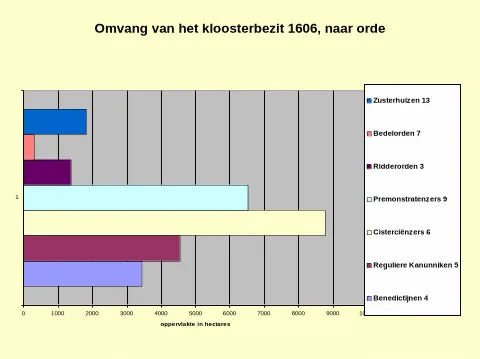
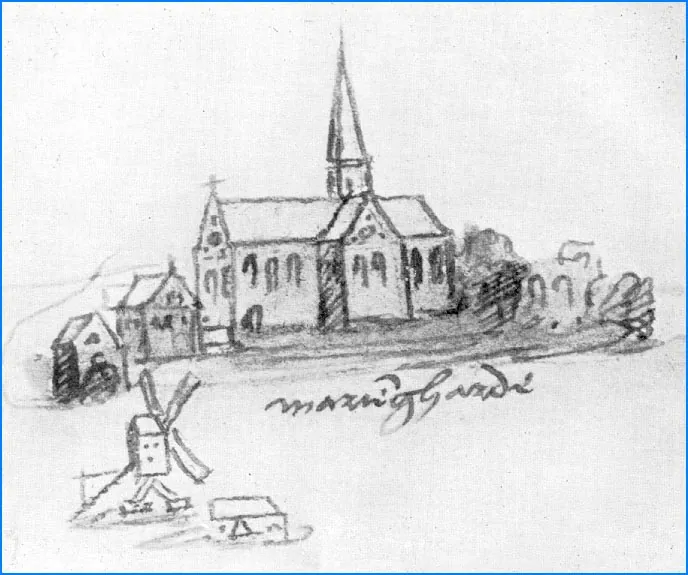
At the start of the 17th century, the States of Friesland confiscated the monasteries and their lands. In the overview below, based on the accounts of receiver Johannes Henrici Rhala from 1606/1607, the monasteries are described with their founding date, the area of land (in pondematen — an old Frisian unit of land area — and hectares) and the value (in stuivers and floreen)1. Gerkesklooster, a Cistercian convent on the border with Groningen, was the richest, with 2287 ha and a value of fl. 9498, immediately followed by the men's monastery Klaarkamp of the same order near Dokkum, with 2511 ha and a value of fl. 7163. The Premonstratensian men's monasteries Mariëngaarde near Hallum (1282 ha, fl. 4750) and Lidlum near Oosterbierum (1345 ha, fl. 4401) were also extensive.
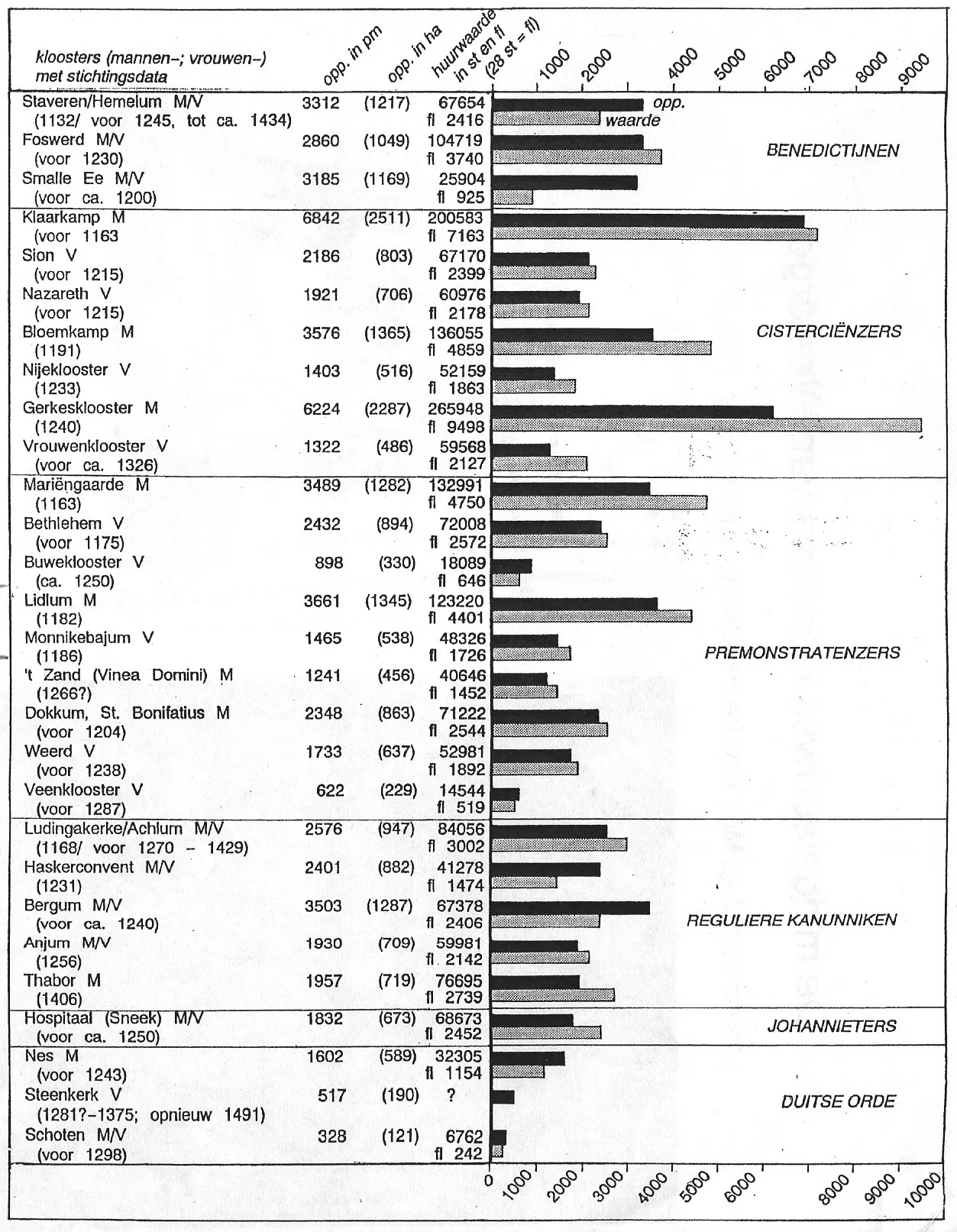
Convents were often founded later as new settlements of a men's monastery: Mariëngaarde, founded in 1163, had Bethlehem (c. 1172) and Buweklooster (1252) as daughter houses; Lidlum (1182) was linked to the women at Monnikebajum (1186).
The power position of the monasteries in the Middle Ages becomes even more evident when we consider that in Westergo they held nearly 20% of the land.
How did the monasteries acquire this land?
This happened through their own land reclamation, but just as important were the gifts from local people entering monastic life, who thereby wanted to secure themselves a place in the afterlife. Through this opportunity to enter monastic life and the offering of (paid) prayer and indulgences, the monasteries held an economic monopoly on the supply of a scarce good for which they had cleverly created the demand themselves: prayer for the deceased at the request of believers, through which the monks and nuns could open the way to heaven for them.
That prayer therefore took up a very large part of the monks' and nuns' normal life. Upon entering, they took the vows of obedience, chastity and poverty.
New monks and nuns generally did not come from poor families and, because of their vow, had to give up their possessions upon entering. The growing wealth of the monasteries, and the power and prosperity that came with it from the 13th century onward, however, also brought discontent. From the middle of the 14th century new orders arose, such as the Cistercians emerging from the Benedictines, who once again sought sobriety and simplicity.
This movement toward sobriety was initially reinforced by economic decline and crisis, with plague epidemics and wars in the 14th century. Criticism arose of the power position of the churches, and a movement toward devotion and ascetic life got underway from Holland and Gelderland. Large landed estates had no place in this. The Windesheim monastery played an important role in this movement.
Over time, however, the new orders too fell back, through growing wealth, into ordinary worldly power politics and acquisitiveness.
Sibrandus Leo writes in his 16th-century chronicle about Lidlum monastery: “From the founding of the monastery onward, it was customary to call its enormous landed possessions allodia2 and grangiae3. These were largely worked with the help of lay brothers. Everything that remained from the yield beyond what was needed for their own subsistence — dairy products, livestock, field crops and whatever else was produced — they delivered, most faithfully and obediently, into the monastery to their abbot and procurator. In this way the multitude of staff and the great number of monks were fed, and that is why the grangiae were given the name munkhuizen.”
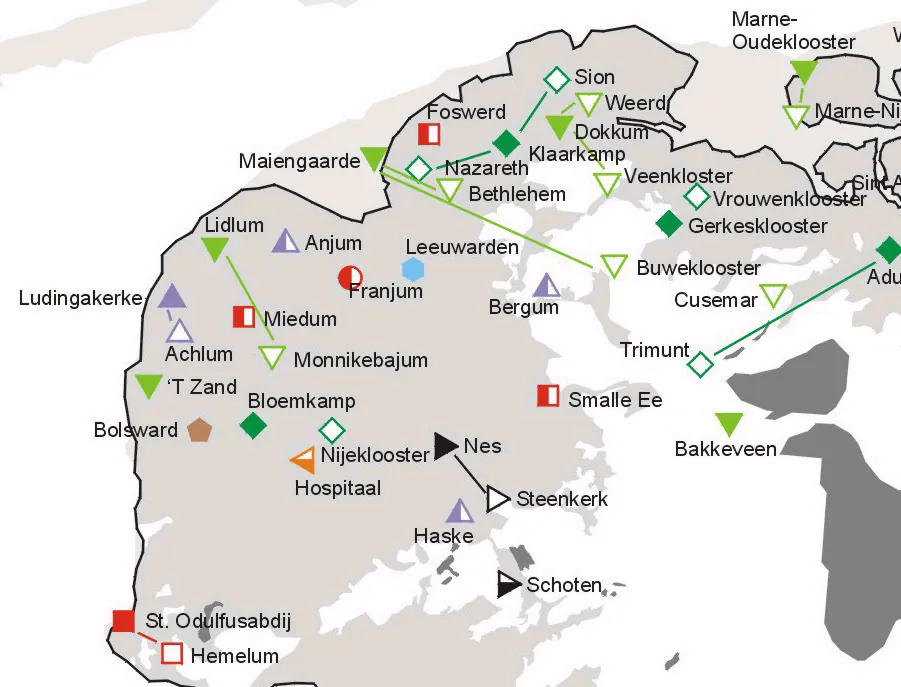
In principle, the monasteries aimed for self-sufficiency. They achieved this autarky together with their granges and monks' houses. Although trade should therefore in theory not have been necessary, in practice agricultural products from the land were also sold, which was used, for example, to purchase building materials or grain.
From the beginning of the 16th century, Lutheran doctrine preached that God alone determines whether someone is worthy of heaven. This undermined the monopoly position of the churches and monasteries on that right of passage to heaven. Wills from that period show that the number and size of gifts declined sharply. The number of new entrants also fell rapidly. Among convents we see this happen somewhat later than among the men's monasteries. This may also be a reason why a number of convents were still so large and wealthy in 1606.
The confiscation of the monasteries' possessions gave the States a tremendous land position in 1606, which they then relinquished again in 1638. They offered the lands for sale, among others to the tenant farmers who had often already worked the land for generations. Suddenly, 20% of the land in Friesland came onto the market. Frisian notables seized their chance and bought up large holdings, sometimes through front men, along with the voting rights attached to them.
So much for a few impressions from Hans Mol's lecture.
What did this development mean for the Kingmas at that time.
Did Saeckle Kingma, owner of the state (a Frisian manor house with land) around 1638, also benefit from this?
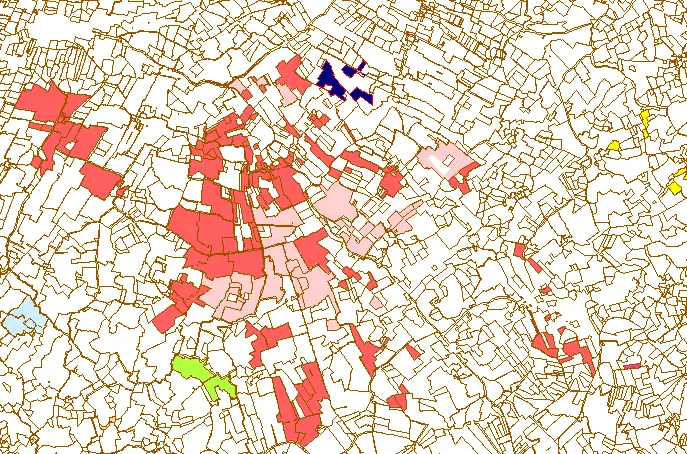
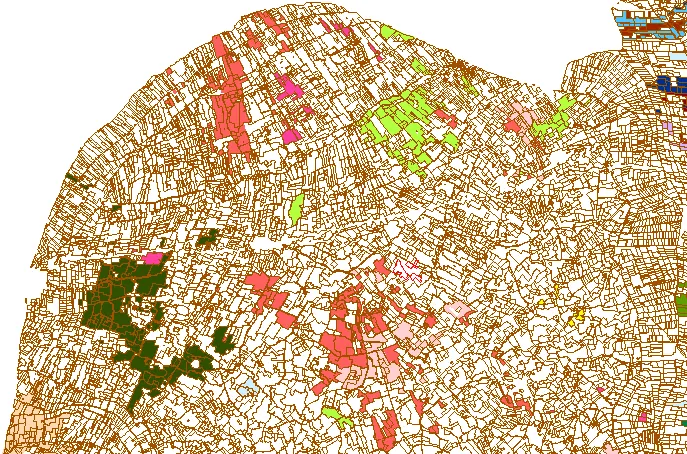
A brief search through HISGIS in the floreencohier (a Frisian land-tax register) of 1700 for possessions of the state, then in the hands of Ignatius van Kingma, shows no landholdings that year coinciding with former monastic estates. Ignatius did hold 85 pondematen (31 ha) of land in the vicinity of Monnikebajum, but this lies next to the former monastic estates (see map). Also in the vicinity of Boer, where estates of the monasteries Lidlum, Tjumarrum and Aalsum are located, I have found no lands of Ignatius's that coincide with former monastic estates.
Joost Kingma
1 Floreen = Rhenish or gold guilder of 28 stuivers
2 Allodia are freehold properties, landholdings over which ownership is absolute.
3 Grangiae are granges, large monastic farms with landed estates.
Kingma State in the Leeuwarder Courant from 1757
Since October 2007, anyone can consult the archive of the Leeuwarder Courant on the internet from the comfort of their armchair at home. More than 11 million articles, on some 800,000 newspaper pages, the first of which appeared on 29 July 1752, can be searched online at word level.
Anyone searching for Kingma gets more than 2,700 hits. And what is the first one?
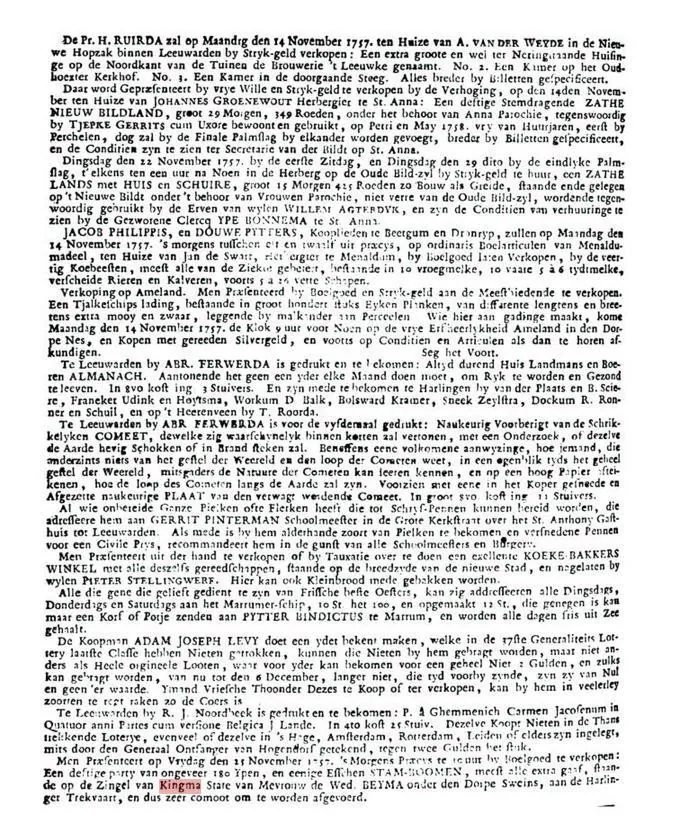
What a stroke of luck. An announcement, on 12 November 1757, of the sale ‘bij boelgoed’ (a public auction of an estate's goods) of some 180 elms and a number of ash trees, standing on the moat of Kingma State, in the possession of the widow Mrs. Beyma in Zweins. The sale would take place on 25 November, at precisely 10 o'clock in the morning, and the lot of trees was advertised as ‘meest alle extra gaaf’ and, as regards its location, as ‘aan de Harlinger Trekvaart, en dus zeer commoot om te worden afgevoerd.’ (sic!)

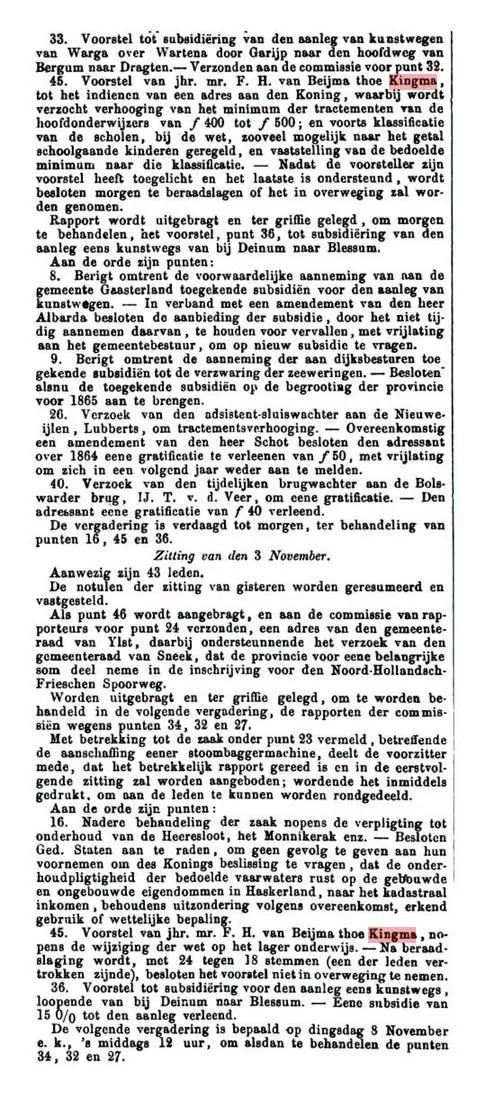
We are of course curious whether the sale of the state (a Frisian manor house with land) in 1864 also made it into the newspaper. And indeed it did. On 26 August the Leeuwarder Courant carried an advertisement from the notaries Schot in Franeker and Van Leeuwen in Leeuwarden announcing an ‘Belangrijke Verkooping en Veiling op Afbraak’. On Monday 5 September provisionally (and 19 September finally), the ‘Buitengoed Kingma State’ would be sold. Place of proceedings: on 5 September at the home of E.C. Oosterbaan(?) on the Breedeplaats in Franeker, and on 19 September in the ‘Stationskoffijhuis’ of K.H. van der Meer, in each case at precisely 4 o'clock in the afternoon. One hour before the provisional sale, an auction on demolition took place.
The country estate turns out to consist of a spacious residence, stabling, coach house and gardener's cottage. The garden and park included a kitchen garden, trees, plantation, walking paths, avenues, moats, ponds, a dovecote, a swannery and a fishery. In addition there was also a farm (sathe, the Frisian farmstead) with land and a few separate plots of land.
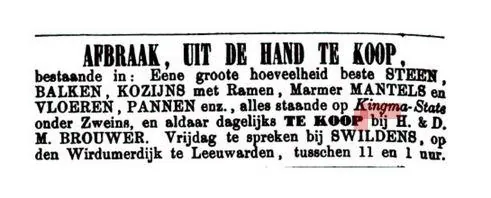
The buyer then had everything demolished and the terp (an artificial dwelling mound raised above flood level) dug away. A newspaper report of 28 February 1865 announces the sale of demolition materials (via notary Haagsma in Leeuwarden). On Saturday 4 March at 9 o'clock in the morning, ‘een aanzienlijke partij’ of materials such as beams, planks, doors, window frames, stone, esterikken(?), white bricks and roof tiles was offered. But it also turns out that the house and the coach house had only been partially demolished. Those parts would then go up for sale as well.
The demolition process then went on for several more months, for on 12 April a substantial lot of demolition goods again went under the hammer at the same notary's. Cash payment only.
Finally, in the autumn of 1865, a few more plots of land were auctioned for lease.
Whether, and if so how and when, the fertile terp soil was sold separately does not appear from the newspaper. The advertisement only lists the land separately, at a price of 4,856 guilders (the currency in use before the euro). Considerably more than the house, for which 2,686 guilders was asked.
Enclosed are a number of images of the sales advertisements from 1864 and 1865.
If you would like to search for newsworthy facts or ancestors yourself: www.archiefleeuwardercourant.nl/




Joost Kingma
The pulpit in the little church of Boer
Kees Kingma

As you probably know, in Boer — a very small village just east of Dongjum (above Franeker) — there is likewise a small church.
It is owned by Stichting Alde Fryske Tsjerken and was in use for a long time as an artist's studio. That is no longer the case, and the church has since also been restored.

What is special for the Kingmas is that the pulpit in this church was once donated by the Brigadier and Colonel Ignatius (van) Kingma, familiar to us. His name accordingly appears on the front of this pulpit (see also Kinkhoorn 7, April 2003). Unfortunately, the funds for the restoration were insufficient to include the pulpit as well. That is why we, as Stichting Kingma State, received a request from Stichting Alde Fryske Tsjerken for a further contribution toward the restoration still needed for the pulpit. At the time, as a foundation we made a contribution toward the restoration of the church. Doing so again is difficult given our Foundation's limited budget, since we want to keep our donations as low as possible and try to manage with a frugal, just about cost-covering policy.
It is of course very important to us, as Kingmas, that the pulpit — which is so directly a reminder of, and connected to, Ignatius Kingma, the last Kingma to live at the State — is brought into good condition and preserved!
We therefore ask our donors, and anyone who wishes to contribute, to transfer an amount according to their means to Stichting Alde Fryske Tsjerken, Postbus 137, 8900 AC Leeuwarden,
Account: Frl. bank 27.81.00.703 or Postbank (Ing) 22.07.600.
with the reference: for the restoration of the pulpit in Boer.

On behalf of our Foundation, thank you in advance.
Kingma Kronkels: Nominated

Joost Kingma
Kingma State in its new form has been nominated by the province of Friesland as a possible new country estate. That good news reached us in the autumn. In spring 2008 the municipality of Franekeradeel sent our proposals for the rebuilding of Kingma State to the province. The nomination was the result. Landscape architect Michael van Gessel has since made a structure sketch for the layout of the estate. This sketch has been presented to the residents of Zweins, the municipality of Franekeradeel and the province.
We are now busy preparing the zoning plan amendment with the municipality that will actually permit the construction. A young architect, Robert van Moorselaar, has also joined our team and has taken on the elaboration of the building complex with four to six houses and a guest house. We hope to get the green light from the municipal council in May to proceed with the development of rural living on our country estate. And in the autumn the provincial status as a pilot country estate should then also be able to become definitive.
Meanwhile, the promotion of living on the country estate has also begun, with a number of articles in the provincial press. Together with the municipality of Franeker, we staffed a stand in March at the housing fair 'Huis & Tuin' in the FEC in Leeuwarden. We are looking for four to six candidates who want to live at Kingma State and want to participate in the project. Should you know of any candidates, they can find more information about living there on our website www.kingmastate.nl, and they can contact the undersigned (see colophon). We have put together an informative brochure describing the intended rural living on our historic country estate in the beautiful Frisian terp (artificial dwelling mound) landscape, which we would be happy to send to candidates. We hope to be able to introduce you to the nominated future residents in the autumn.
Colophon
'De Kinkhoorn' is a periodic publication of Stichting Kingma State. The foundation aims to promote historical research into the former country estate, its residents and their descendants.
If you are interested in the work of Stichting Kingma State, you can become a donor. In doing so you support the historical research, and you will receive De Kinkhoorn periodically.
In the autumn, usually in November, the foundation organizes a donors' gathering with lectures.
You can become a donor by registering with the foundation by post, e-mail or via the website, and by transferring your annual donation (target amount at least €22.50, minimum €15) to account number 55.00.97.538 at ABN AMRO bank in Arnhem, in the name of Treasurer Stichting Kingma State.
Print run: 150 copies.
Published at least twice a year.
Stichting Kingma State
Secretariat: Sterrenboslaan 20, 3972 GD Driebergen
tel: 0343 521212
fax: 0343 517689
e-mail: info@joostkingma.nl
website: www.kingmastate.nl
Board: Chairman: Tj. Kingma, Zwolle
Secretary: J.H. Kingma, Driebergen
Treasurer: J.M. Kingma, Arnhem
Board member: C.S.J. Kingma, Emmen
Design and production: Drukkerij Bakker Baarn
This publication is registered with the Koninklijke Bibliotheek under ISSN: 1569-8645
For full or partial reproduction of the content of articles from De Kinkhoorn, please include a source citation.